

Clarity Principles and Factors
The clarity of a laboratory grown diamond is determined by its flaws. Every stone has inclusions and blemishes that give it unique character and charm, many of which are only visible under a microscope. The diamond clarity scale ranges from Flawless (FL) to Included (I3). At the lower end of the scale, inclusions may affect the diamond’s transparency, brilliance, and durability.

I.F.
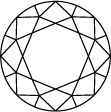
Internally flawless
VVS 1
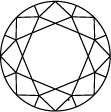
VVS 2
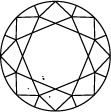
Very very slightly included
VS 1
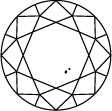
VS 2
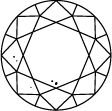
Very slightly included
SI 1
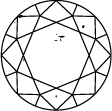
SI 2
Slightly included
I 1

I 2
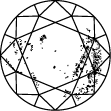
I 3
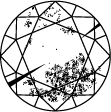
Included
Laboratory Grown Diamond Clarity Chart
Title:Diamond clarity scale and grades
Subtitle:
The diamond clarity scale is used to indicate the purity of a stone based on two naturally occurring characteristics: inclusions and blemishes. The number, nature, size, and location of external (blemishes) and internal (inclusions) features determine a diamond’s clarity rating. Diamond clarity grades are decided under standard viewing conditions with 10x magnification. IF is used to signify an internally flawless diamond while I3 stands for a diamond with obvious and visible inclusions.

What is Diamond Cut?
Cut quality depends on craftsmanship. The term refers to the way each diamond’s facets interact with the light and reveal its internal fire. Cut gives each stone its distinct personality, and perfecting the proportions, symmetry, and precise angles of laboratory grown diamonds ensures they are cut for maximum brilliance.
Cut Principles and Factors
The quality of a laboratory grown diamond cut is based on its proportions, symmetry, and polish. An expert cut results in several perfectly crafted facets that absorb and reflect the light so the stone scintillates from every angle. When assessing cut, graders consider the diamond’s face-up appearance, design, and craftsmanship.
Laboratory Grown Diamond Shapes
Swarovski Created Diamonds collections feature a range of different laboratory grown diamond shapes and cuts. The shape of a laboratory grown diamond refers to its outline or external form when viewed from above. Cut is a marker of quality, reflecting how well the stone has been faceted and polished as well as how the angles and proportions of each facet have been crafted to interact with the light. Choose one of our Swarovski Created Diamonds shapes to reflect your individual style and, as each stone is cut for brilliance, it will add luminosity to any look.
Color Principles and Factors
The most desirable diamond color is no color at all. Colorless stones are highly prized but they are also extremely rare, whereas lower quality diamonds can have a yellow or brown tone. The diamond color scale ranges from D to Z and Swarovski Created Diamonds collections only use laboratory grown diamonds with a color rating of D-G.
Colorless
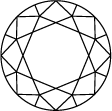
D-F
Near colorless
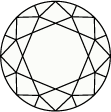
G-J
Slightly tinted
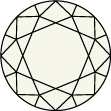
K-M
Very light color

N-R
Light color
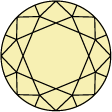
S-Z
Diamond color scale
Diamond color is rated on a scale from D to Z. D to F are used to denote colorless stones, while those in the S to Z categories appear in shades of light yellow or brown. Swarovski Created Diamonds jewelry only uses the finest laboratory grown diamonds, meaning they range from colorless to near colorless (D-G).

What is Diamond Carat Weight?
A carat is a unit of weight used to measure precious stones including laboratory grown diamonds. When comparing diamonds, one can have a higher carat without appearing larger, and two diamonds with the same carat weight can vary in size if one is cut deeper than the other. One carat weighs one-fifth of a gram and can be divided into 100 points.

2,5 mm
0,05 CT

3,0 mm
0,10 CT

3,8 mm
0,20 CT

4,5 mm
0,30 CT

4,8 mm
0,40 CT

5,2 mm
0,50 CT

5,8 mm
0,70 CT

6,3 mm
0,90 CT

6,5 mm
1,00 CT

6,9 mm
1,25 CT

7,4 mm
1,50 CT

7,8 mm
1,75 CT

8,2 mm
2,00 CT

8,8 mm
2,50 CT

9,4 mm
3,00 CT
Tableau du caratage
Title:Échelle des carats des diamants de synthèse
Subtitle:
Le carat est l’unité de mesure standard internationale désignée pour mesurer le poids du diamant. Il fait référence à la graine de caroubier appelée caroube. Les marchands l’utilisaient déjà comme unité de mesure du diamant dans l’antiquité. Un carat équivaut à 200 milligrammes. Un diamant de cinq carats pèsera donc un gramme. Le carat d’un diamant ne correspond pas à la taille d’une pierre, il se réfère simplement à son poids, et les diamants deviennent généralement plus chers à mesure que leur poids en carats augmente.
Qualité assurée
Chaque diamant de synthèse serti dans les bijoux raffinés Swarovski Created Diamonds est évalué et certifié par l’IGI (Institut Gemmologique International), selon les critères des 4Cs universellement reconnus. La taille, la pureté, la couleur et le poids en carats de chaque pierre déterminent sa qualité et sa valeur. Swarovski utilise uniquement des diamants de synthèse de haute qualité classés G+ en couleur et VS+ en pureté.
Découvrez les Swarovski Created Diamonds

Tout savoir sur les Swarovski Created Diamonds
Title:
Plongez plus profondément dans l’univers des Swarovski Created Diamonds. Découvrez des collections qui allient l’élégance traditionnelle à des créations innovantes autour du diamant.

Guide d’achat des diamants de synthèse
Title:
Les collections de joaillerie Swarovski Created Diamonds présentent des créations originales qui associent des diamants de synthèse taillés avec brio à des métaux précieux.

Que sont les diamants de synthèse ?
Title:
Découvrez comment les diamants peuvent être créés en laboratoire grâce à une chaleur et une pression extrêmes pour reproduire parfaitement le processus de la nature.
Foire aux questions
Les 4C du diamant - FAQ
Que signifient les 4C ?
Aucun diamant ne ressemble à un autre. Chaque pierre possède ses caractéristiques propres. Tout comme les diamants naturels, nos diamants créés en laboratoire sont évalués selon quatre critères appelés 4C. Reconnus dans le monde entier par l’industrie diamantaire, ces 4C interviennent dans le contrôle qualité du diamant et se réfèrent à la taille (cut), la clarté (clarity), la couleur (color) et le caratage (carat).
La clarté du diamant est-elle importante ?
Plus le degré de clarté est élevé, plus le diamant aura de la valeur, car il contiendra moins d’inclusions et d’imperfections.
Quel est le degré de clarté le plus élevé du diamant ?
La clarté dépend de la pureté de la pierre qui, elle-même, repose sur deux critères visuels : les inclusions et les imperfections.
Afin d’évaluer sa clarté, le diamant est inspecté à l’aide d’une loupe de grossissement 10x. Le nombre et la nature des éléments externes (imperfections) et internes (inclusions), ainsi que leur taille et leur position déterminent le degré de clarté.
Les pierres sont classées par les gemmologues de la meilleure note, IF (sans défaut interne), à la moins bonne, I3 (Inclusions).
Afin d’évaluer sa clarté, le diamant est inspecté à l’aide d’une loupe de grossissement 10x. Le nombre et la nature des éléments externes (imperfections) et internes (inclusions), ainsi que leur taille et leur position déterminent le degré de clarté.
Les pierres sont classées par les gemmologues de la meilleure note, IF (sans défaut interne), à la moins bonne, I3 (Inclusions).
Les diamants de laboratoire sont-ils sans défaut ?
Non, presque tous les diamants (extraits ou créés en laboratoire) contiennent des inclusions. Les inclusions métalliques ne concernent que les diamants de laboratoire. Si une trace de métal est détectée, on peut ainsi supposer qu’il s’agit d’un diamant de laboratoire. Bien que les diamants créés en laboratoire possèdent des défauts, Swarovski n’utilise que les pierres de la plus haute qualité dans ses collections Swarovski Created Diamond, certifiées par l’IGI (International Gemological Institute) et les 4C.
Les diamants de laboratoire peuvent-ils perdre leur éclat ?
Non, les diamants de laboratoire ne perdent rien de leur éclat avec le temps. Strictement identiques aux diamants naturels, ils sont dotés des mêmes caractéristiques physiques et chimiques. Leur apparence ne s’altère pas avec le temps. Lorsque le grain de carbone utilisé est de qualité inférieure, certains diamants peuvent contenir des défauts apparents, comme des problèmes de tonalités, des impuretés ou des altérations. Les bijoux Swarovski Created Diamonds ne contiennent aucun diamant aux défauts artificiels.
Comment se passe la certification et l’évaluation des diamants créés en laboratoire ?
Les diamants de laboratoire servant à la création des bijoux Swarovski Created Diamonds sont sélectionnés à la main et examinés par des experts gemmologues qui s’assurent de leur conformité aux normes de la plus haute qualité. Chaque pièce des collections Galaxy et Eternity est accompagnée d’un certificat numérique émis par l’IGI (International Gemological Institute).
Qu’appelle-t-on facette du diamant ?
鑽石切刻面是指構成鑽石形狀的每個平面。每顆鑽石都有多個切刻面,使其能夠吸收和反射光線。
如何判定鑽石的切割品質?
我們通常認為鑽石的切割是指鑽石的切割形狀 (圓形、心形、橢圓形、橄欖形、梨形) ,但鑽石切割實際上指的是鑽石切割面與光線的相互作用。 鑽石的切割是衡量鑽石形狀、幾何形狀和表面處理的品質。 圓形明亮式切割鑽石的切割等級從理想 (最好) 到不良都有。 Swarovski 對切割品質毫不妥協,以確保我們所有的培育鑽石都具有出色的光線效果和閃耀程度。
什麼是最佳鑽石切割?
切割是指鑽石的切割面如何與光線相互作用,以顯示其內部的火光。切割的程序賦予每顆鑽石各自的獨特性,Swarovski Created Diamonds 培育鑽石出衆的比例、對稱性和精準的切割角度讓鑽石綻放璀璨的光芒。最佳的切割方式是在寬度和深度之間取得平衡,以形成對稱,既不會太淺,也不會太深。這會讓光線在穿過鑽石時創造精巧的折射點,將光線反射到鑽石內部,增強鑽石璀璨耀眼的亮度。
如何判定鑽石的顏色?
顏色是指白鑽固有的天然色調。顏色分級的產業標準是將每顆鑽石與對照組鑽石進行對比評估,然後提供以英文字母 D (無色) 到 Z (淺黃色或棕色) 的區分等級。
鑽石越接近無色,品質就越好。
鑽石越接近無色,品質就越好。
實驗室製造的鑽石會有瑕疵嗎?
若使用品質不佳的鑽石種晶,某些實驗室培育的鑽石會有明顯的缺陷,例如:因鑽石中的雜質或晶體結構不完善造成的色差。Swarovski 不會販售具有反常、有問題特徵的培育鑽石。
什麼是鑽石克拉重量?
克拉是一種重量單位,專門用來衡量包括培育鑽石在內的珍貴寶石。克拉數較高的鑽石,外觀看起來並不一定較大;兩顆克拉數相同的鑽石,如果其中一顆切割得比另一顆深,它們的大小會不相同。一克拉的重量是 0.2 公克,區分成 100 分。
鑽石的克拉重量是什麼?如何測量,重要性為何?
克拉重量是鑽石的標準重量單位,也是分級過程的第一步。鑽石克拉重量是衡量鑽石重量的單位。每克拉可細分為 100“分”。 這樣在測量重量時就可以精確到小數點後兩位。小於一克拉的鑽石重量可以只用“分”來描述。鑽石越大,克拉重量就越多,但只有您才能決定這對您來說有多重要。
鑽石的克拉重量愈大愈好?
這完全是取決於個人的問題。如果您正在尋找一顆較大的鑽石,您應該尋找克拉數較高的鑽石,因為克拉數表示鑽石的重量,因此也表示鑽石的大小。