

Inhaltsübersicht
Inhaltsübersicht
- Was ist die Reinheit bei Diamanten?
- Reinheitstabelle für im Labor gezüchtete Diamanten
- Was bedeutet Diamantschliff?
- Prinzipien des Diamantschliffs
- Swarovskis Diamantformen
- Was bedeutet Diamantfarbe?
- Farbtabelle für im Labor gezüchtete Diamanten
- Was ist das Karatgewicht eines Diamanten?
- Tabelle zum Karatgewicht von Diamanten
Prinzipien und Faktoren für Reinheit
Die Reinheit eines im Labor gezüchteten Diamanten wird anhand seiner Reinheitsmerkmale bestimmt. Jeder Stein weist Einschlüsse und äußere Merkmale auf, die ihm seinen einzigartigen Charakter und besonderen Charme verleihen. Viele davon sind nur unter dem Mikroskop sichtbar. Die Reinheitsskala für Diamanten reicht von makellos (Flawless, FL) bis eingeschlossen (Included, I3). Bei niedrigeren Reinheitsgraden können Einschlüsse die Transparenz, Brillanz und Haltbarkeit des Diamanten beeinflussen.

I.F.
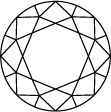
Lupenrein
VVS 1
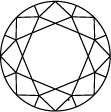
VVS 2
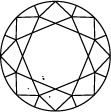
Kaum erkennbare Einschlüsse
VS 1
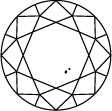
VS 2
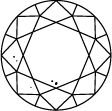
Sehr kleine Einschlüsse
SI 1
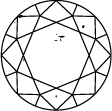
SI 2
Kleine Einschlüsse
I 1

I 2
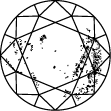
I 3
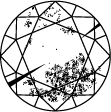
Einschlüsse
Reinheitstabelle für im Labor gezüchtete Diamanten
Title:Reinheitsskala für Diamanten und Reinheitsgrade
Subtitle:
Die Reinheitsskala von Diamanten gibt die Reinheit eines Steins anhand von zwei natürlich vorkommenden Merkmalen an: Einschlüsse und äußere Merkmale. Die Anzahl, Art, Größe und Position äußerer Merkmale sowie innerer Einschlüsse bestimmen den Reinheitsgrad eines Diamanten. Die Reinheitsgrade von Diamanten werden unter standardisierten Betrachtungsbedingungen bei zehnfacher Vergrößerung bestimmt. IF steht für einen innen makellosen Diamanten, während I3 einen Diamanten mit deutlichen, sichtbaren Einschlüssen bezeichnet.

Was bedeutet Diamantschliff?
Die Schliffqualität hängt von der handwerklichen Ausführung ab. Der Begriff beschreibt, wie die Facetten eines Diamanten mit dem Licht interagieren und sein inneres Feuer sichtbar machen. Der Schliff verleiht jedem einzelnen Stein seine Persönlichkeit. Er perfektioniert die Proportionen, die Symmetrie und die Winkel. Der Präzisionsschliff von im Labor gezüchteten Diamanten verleiht ihnen ihre unverkennbare Brillanz.
Schliffprinzipien und -faktoren
The quality of a laboratory grown diamond cut is based on its proportions, symmetry, and polish. An expert cut results in several perfectly crafted facets that absorb and reflect the light so the stone scintillates from every angle. When assessing cut, graders consider the diamond’s face-up appearance, design, and craftsmanship.
Laboratory Grown Diamond Shapes
Swarovski Created Diamonds collections feature a range of different laboratory grown diamond shapes and cuts. The shape of a laboratory grown diamond refers to its outline or external form when viewed from above. Cut is a marker of quality, reflecting how well the stone has been faceted and polished as well as how the angles and proportions of each facet have been crafted to interact with the light. Choose one of our Swarovski Created Diamonds shapes to reflect your individual style and, as each stone is cut for brilliance, it will add luminosity to any look.
Color Principles and Factors
The most desirable diamond color is no color at all. Colorless stones are highly prized but they are also extremely rare, whereas lower quality diamonds can have a yellow or brown tone. The diamond color scale ranges from D to Z and Swarovski Created Diamonds collections only use laboratory grown diamonds with a color rating of D-G.
Colorless
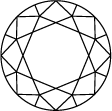
D-F
Near colorless
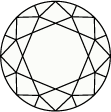
G-J
Slightly tinted
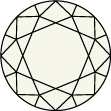
K-M
Very light color

N-R
Light color
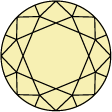
S-Z
Diamond color scale
Diamond color is rated on a scale from D to Z. D to F are used to denote colorless stones, while those in the S to Z categories appear in shades of light yellow or brown. Swarovski Created Diamonds jewelry only uses the finest laboratory grown diamonds, meaning they range from colorless to near colorless (D-G).

What is Diamond Carat Weight?
A carat is a unit of weight used to measure precious stones including laboratory grown diamonds. When comparing diamonds, one can have a higher carat without appearing larger, and two diamonds with the same carat weight can vary in size if one is cut deeper than the other. One carat weighs one-fifth of a gram and can be divided into 100 points.

2.5 mm
0.05 CT

3.0 mm
0.10 CT

3.8 mm
0.20 CT

4.5 mm
0.30 CT

4.8 mm
0.40 CT

5.2 mm
0.50 CT

5.8 mm
0.70 CT

6.3 mm
0.90 CT

6.5 mm
1.00 CT

6.9 mm
1.25 CT

7.4 mm
1.50 CT

7.8 mm
1.75 CT

8.2 mm
2.00 CT

8.8 mm
2.50 CT

9.4 mm
3.00 CT
Diamond Carat Weight Chart
Title:Laboratory grown diamond carat scale
Subtitle:
Carats are the international standard unit of measurement for the weight of a diamond. It derives from the word ‘carob’, a seed that was used as a diamond weight reference for traders in the ancient world. One carat is equal to 200 milligrams so a five carat diamond will weigh one gram. Diamond carat doesn’t equate to the size of a stone, it simply refers to how much it weighs, and diamonds usually become more expensive as their carat weight increases.
Quality Assured
Every laboratory grown diamond set in Swarovski Created Diamonds fine jewelry is assessed and certified by the IGI (International Gemological Institute), using the universally recognized 4Cs. The cut, clarity, color, and carat of each stone determines its quality and worth. Swarovski only uses high quality laboratory grown diamonds rated G+ in color and VS+ in clarity.
Discover Swarovski Created Diamonds

All About Swarovski Created Diamonds
Title:
Dive deeper into the world of Swarovski Created Diamonds. Explore collections that shine with traditional elegance to ones that take a fresh approach to diamond design.

Laboratory Grown Diamonds Buying Guide
Title:
Swarovski Created Diamonds fine jewelry collections feature distinctive designs that pair masterfully cut laboratory grown diamonds with precious metals.

What Are Laboratory Grown Diamonds?
Title:
Learn more about how diamonds can be grown in laboratory conditions using intense heat and pressure to perfectly replicate nature’s process.
Frequently asked questions
Diamond 4Cs FAQs
What are the 4Cs?
Every diamond varies slightly from the next and has its own individual distinguishing characteristics. Laboratory grown diamonds are 100% diamonds, and just like mined diamonds our laboratory grown diamonds are evaluated according to the 4Cs of diamond grading. The 4Cs are color, clarity, cut and carat weight, and they are the globally accepted standards used to assess the quality of diamonds.
Is diamond clarity important?
The higher the clarity grading, the less inclusions or blemishes a diamond has, making it a higher-value diamond than one with a lower grading.
What is the highest diamond clarity?
Diamond clarity is a measure of the purity of the stone graded by the visibility of two types of characteristics - inclusions and blemishes.
In order to assess clarity, the diamond is inspected under 10x power magnification. The number and nature of external (blemishes), and internal characteristics (inclusions), as well as their size and position, determine the grade.
Gemologists grade diamonds from Internally Flawless (IF) as the highest quality to Included (I3).
In order to assess clarity, the diamond is inspected under 10x power magnification. The number and nature of external (blemishes), and internal characteristics (inclusions), as well as their size and position, determine the grade.
Gemologists grade diamonds from Internally Flawless (IF) as the highest quality to Included (I3).
Are laboratory grown diamonds flawless?
No, nearly all diamonds (mined or laboratory grown) have inclusions. Metallic inclusions can occur in laboratory grown diamonds. If an expert spots a trace of metal in a diamond, they can assume it is laboratory grown. While laboratory grown diamonds with defects do exist, Swarovski only uses high quality laboratory grown diamonds certified by the International Gemological Institute (IGI) according to the 4Cs to ensure that only the finest quality diamonds join the Swarovski Created Diamond collections.
Do laboratory grown diamonds get cloudy?
No, laboratory-grown diamonds do not get cloudy over time. They are 100% identical to diamonds with the same physical and chemical properties, and should not degrade or change appearance over time. Where poor quality diamond seeds have been used, some laboratory-grown diamonds contain obvious defects, such as color tinges from impurities in the diamond or crystal structure imperfections. The laboratory grown diamonds processed in Swarovski Created Diamonds jewelry are a very high quality standard and do not have unnatural, problematic characteristics.
How are laboratory grown diamonds certified and graded?
The laboratory grown diamonds processed in Swarovski Created Diamonds jewelry are hand-selected and examined by experienced gemologists to ensure they fulfill our high quality standards. Every piece of jewelry in the Galaxy and Eternity collections is accompanied with a digital laboratory report from the International Gemological Institute (IGI).
What are diamond facets?
Diamond facets refer to each flat surface that creates the shape of a diamond. Every diamond possesses multiple facets that enable it to absorb and reflect light.
How is diamond cut quality determined?
We often think of a diamond’s cut as shape (round, heart, oval, marquise, pear), but what diamond cut actually does mean is how well a diamond’s facets interact with light. The cut of a diamond is the measure of the quality of the shape, geometry and finish of the diamond. Round brilliant diamonds receive a formal cut grade on a scale from Ideal (the best) to Poor. Swarovski is uncompromising on cut quality to ensure all of our laboratory grown diamonds have optimal light performance and sparkle.
What is the best diamond cut?
Cut refers to how a diamond’s facets interact with light to reveal its internal fire. It is the cut that gives each diamond its personality, and perfecting laboratory grown diamonds proportions, symmetry, and precision-cut angles of Swarovski Created Diamonds gives them their brilliant shine. The best cut has a balance between the width and depth to create symmetry, neither to shallow nor to deep. Creating the perfect refraction point for light through the diamond, reflecting it within the diamond and highlighting its polished brightness.
How is a diamond’s color determined?
Color refers to the natural tint inherent in white diamonds. The industry standard for grading color is to evaluate each diamond against a master set then assign a letter grade from D (colorless) to Z (light yellow).
The closer the diamond is to being colorless, the higher its quality.
The closer the diamond is to being colorless, the higher its quality.
Do laboratory created diamonds have blemishes?
Where poor quality diamond seeds have been used, some laboratory-grown diamonds contain obvious defects, such as color tinges from impurities or structural imperfections. Swarovski does not sell laboratory grown diamonds with unnatural, problematic characteristics.
What is diamond carat weight?
A carat is a unit of weight used specifically to measure precious stones including laboratory grown diamonds. A diamond may have a higher carat weight without appearing larger, and two diamonds of the same carat weight can vary in size if one is cut deeper than the other. One carat weighs 1/5 of a gram and is divided into 100 points.
What is the carat weight of a diamond, how is it measured and how important is it?
Carat weight it the standard weight unit for diamonds, and the first step in the grading process. Diamond carat weight is the measurement of how much the diamond weighs. Each carat can be subdivided into 100 “points.” This allows precise measurements to the hundredth decimal place. The weight of a diamond smaller than one carat may be described by its “points” alone. The larger the diamond is, the more carats it will be, but only you can decide how important that is to you.
Is it better to have a higher carat diamond?
This is an entirely personal question. If you are looking for a larger diamond, you should look for a higher carat, as this indicates the weight and therefore the size of the diamond.