

Panoramica contenuti
Panoramica contenuti
- Che cos’è la purezza del diamante?
- Tabella di purezza dei diamanti creati in laboratorio
- Che cos’è il taglio del diamante?
- Principi del taglio del diamante
- Forme dei diamanti Swarovski
- Che cos'è il colore del diamante?
- Scala dei colori dei diamanti creati in laboratorio
- Che cos’è il peso in carati del diamante?
- Tabella del peso in carati del diamante
Parametri e fattori di purezza
La purezza di un diamante creato in laboratorio è determinata dalle sue imperfezioni. Ogni pietra presenta inclusioni e imperfezioni che le conferiscono un carattere e un fascino unici, molte delle quali sono visibili solo al microscopio. La scala di purezza del diamante va da Flawless (FL), ossia Privo di inclusioni interne, a Included (I3), cioè con Inclusione di un'imperfezione invisibile. All'estremità inferiore della scala, le inclusioni possono influire sulla trasparenza, brillantezza e durabilità del diamante.

IF
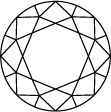
Privo di inclusioni interne
VVS 1
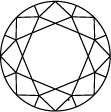
VVS 2
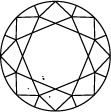
Very very slightly included (inclusioni estremamente piccole)
VS 1
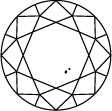
VS 2
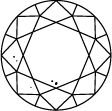
Very slightly included (inclusioni molto piccole)
SI 1
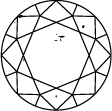
SI 2
Slightly included (inclusioni piccole)
I 1

I 2
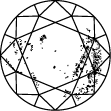
I 3
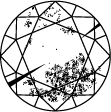
Included (inclusioni)
Tabella di purezza dei diamanti creati in laboratorio
Title:Scala e gradi di purezza del diamante
Subtitle:
La scala di purezza del diamante è usata per indicare la purezza di una pietra basata su due caratteristiche naturali: inclusioni e imperfezioni. Il numero, la natura, la dimensione e la posizione delle caratteristiche esterne (imperfezioni) e interne (inclusioni) determinano la classificazione di purezza di un diamante. I gradi di purezza del diamante sono determinati in condizioni di visualizzazione standard con lente di ingrandimento 10x. La categoria IF indica un diamante privo di inclusioni interne mentre, all’altra estremità del diagramma di purezza del diamante, I3 indica l’inclusione di un’imperfezione visibile.

Che cos’è il taglio del diamante?
La qualità del taglio dipende dalla maestria artigianale. Il taglio si riferisce al modo in cui le sfaccettature del diamante interagiscono con la luce per rivelarne il fulgore interiore. Il taglio conferisce ad ogni diamante una personalità unica, mentre il perfezionamento delle proporzioni, la simmetria e le angolazioni tagliate con precisione dei diamanti creati in laboratorio conferiscono loro una brillante lucentezza.
Parametri e fattori di taglio
La qualità del taglio di un diamante creato in laboratorio è determinata dalle sue proporzioni, dalla sua simmetria e dalla sua lucidatura. Un taglio sapiente si traduce in numerose sfaccettature perfettamente realizzate che assorbono e riflettono la luce, in modo che la pietra scintilli da ogni angolazione. Nella valutazione del taglio, gli esperti considerano l'aspetto del diamante osservato dall'alto, il design e la maestria artigianale.
Forme dei diamanti creati in laboratorio
Le collezioni Swarovski Created Diamonds presentano una gamma di diverse forme e tagli di diamanti creati in laboratorio. La forma di un diamante creato in laboratorio si riferisce al suo contorno o alla sua forma esterna quando viene osservato dall'alto. Il taglio è un indicatore di qualità, che riflette quanto bene la pietra sia stata sfaccettata e lucidata, nonché come angoli e proporzioni di ogni sfaccettatura siano stati studiati per interagire con la luce. Scegli una delle forme dei nostri Swarovski Created Diamonds per esprimere il tuo stile unico: ogni pietra, tagliata per esaltarne la brillantezza, aggiunge una luminosità straordinaria a qualsiasi look.
Parametri e fattori cromatici
Il colore del diamante più desiderabile è l'assenza totale di colore. Le pietre incolori sono molto ambite ma sono anche estremamente rare, mentre i diamanti di qualità inferiore possono avere una tonalità gialla o marrone. La scala del colore dei diamanti varia da D a Z e le collezioni Swarovski Created Diamonds utilizzano solo diamanti creati in laboratorio con una classificazione del colore da D a G.
Incolore
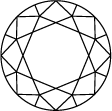
D-F
Quasi incolore
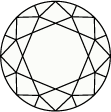
G-J
Leggermente colorato
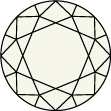
K-M
Molto chiaro

N-R
Chiaro
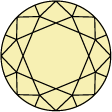
S-Z
Scala del colore del diamante
Il colore del diamante viene classificato su una scala che va da D a Z. Ogni lettera sul diagramma definisce una sfumatura della pietra: quelle classificate da D a F appaiono incolori, mentre quelle classificate da S a Z presentano tonalità giallo chiaro o marrone. I gioielli Swarovski Created Diamonds utilizzano solo i migliori diamanti creati in laboratorio, ovvero diamanti classificati da incolori a quasi incolori (fascia D-G).

Che cos’è il peso in carati del diamante?
Il carato è l’unità utilizzata per determinare il peso delle pietre preziose, compresi i diamanti creati in laboratorio. Un diamante può avere un peso in carati superiore senza per questo essere di dimensioni maggiori. Due diamanti dello stesso peso in carati possono avere dimensioni diverse se uno viene tagliato più in profondità dell’altro. Un carato pesa un quinto di grammo ed è suddiviso in 100 punti.

2,5 mm
0,05 ct

3,0 mm
0,10 ct

3,8 mm
0,20 ct

4,5 mm
0,30 ct

4,8 mm
0,40 ct

5,2 mm
0,50 ct

5,8 mm
0,70 ct

6,3 mm
0,90 ct

6,5 mm
1,00 ct

6,9 mm
1,25 ct

7,4 mm
1,50 ct

7,8 mm
1,75 ct

8,2 mm
2,00 ct

8,8 mm
2,50 ct

9,4 mm
3,00 ct
Tabella del peso in carati del diamante
Title:Scala di caratura dei diamanti creati in laboratorio
Subtitle:
I carati sono un’unità di misura standard internazionale per il peso di un diamante. Deriva dalla parola 'carruba', un seme che veniva usato come riferimento di peso per i diamanti dai commercianti nel mondo antico. Un carato equivale a 200 milligrammi, un diamante da 5 carati pesa dunque un grammo. Il carato del diamante non equivale alla dimensione di una pietra. Si riferisce semplicemente a quanto pesa, e i diamanti di solito diventano più costosi all'aumentare del loro peso in carati.
Qualità garantita
Ogni diamante creato in laboratorio incastonato nei gioielli di alta gioielleria Swarovski Created Diamonds è valutato e certificato dall'IGI (International Gemological Institute), utilizzando le 4C universalmente riconosciute. Il taglio, la purezza, il colore e la caratura di ogni pietra ne determinano la qualità e il valore. Swarovski utilizza solo diamanti creati in laboratorio di alta qualità con classificazione G+ per il colore e VS+ per la purezza.
Scopri Swarovski Created Diamonds.

Tutto su Swarovski Created Diamonds
Title:
Immergiti nel mondo di Swarovski Created Diamonds. Esplora collezioni che brillano di eleganza classica fino a proposte che reinterpretano il design del diamante con uno spirito fresco e contemporaneo.

Laboratory Grown Diamonds Buying Guide
Title:
Swarovski Created Diamonds fine jewelry collections feature distinctive designs that pair masterfully cut laboratory grown diamonds with precious metals.

What Are Laboratory Grown Diamonds?
Title:
Learn more about how diamonds can be grown in laboratory conditions using intense heat and pressure to perfectly replicate nature’s process.
Frequently asked questions
Diamond 4Cs FAQs
What are the 4Cs?
Every diamond varies slightly from the next and has its own individual distinguishing characteristics. Laboratory grown diamonds are 100% diamonds, and just like mined diamonds our laboratory grown diamonds are evaluated according to the 4Cs of diamond grading. The 4Cs are color, clarity, cut and carat weight, and they are the globally accepted standards used to assess the quality of diamonds.
Is diamond clarity important?
The higher the clarity grading, the less inclusions or blemishes a diamond has, making it a higher-value diamond than one with a lower grading.
What is the highest diamond clarity?
Diamond clarity is a measure of the purity of the stone graded by the visibility of two types of characteristics - inclusions and blemishes.
In order to assess clarity, the diamond is inspected under 10x power magnification. The number and nature of external (blemishes), and internal characteristics (inclusions), as well as their size and position, determine the grade.
Gemologists grade diamonds from Internally Flawless (IF) as the highest quality to Included (I3).
In order to assess clarity, the diamond is inspected under 10x power magnification. The number and nature of external (blemishes), and internal characteristics (inclusions), as well as their size and position, determine the grade.
Gemologists grade diamonds from Internally Flawless (IF) as the highest quality to Included (I3).
Are laboratory grown diamonds flawless?
No, nearly all diamonds (mined or laboratory grown) have inclusions. Metallic inclusions can occur in laboratory grown diamonds. If an expert spots a trace of metal in a diamond, they can assume it is laboratory grown. While laboratory grown diamonds with defects do exist, Swarovski only uses high quality laboratory grown diamonds certified by the International Gemological Institute (IGI) according to the 4Cs to ensure that only the finest quality diamonds join the Swarovski Created Diamond collections.
Do laboratory grown diamonds get cloudy?
No, laboratory-grown diamonds do not get cloudy over time. They are 100% identical to diamonds with the same physical and chemical properties, and should not degrade or change appearance over time. Where poor quality diamond seeds have been used, some laboratory-grown diamonds contain obvious defects, such as color tinges from impurities in the diamond or crystal structure imperfections. The laboratory grown diamonds processed in Swarovski Created Diamonds jewelry are a very high quality standard and do not have unnatural, problematic characteristics.
How are laboratory grown diamonds certified and graded?
The laboratory grown diamonds processed in Swarovski Created Diamonds jewelry are hand-selected and examined by experienced gemologists to ensure they fulfill our high quality standards. Every piece of jewelry in the Galaxy and Eternity collections is accompanied with a digital laboratory report from the International Gemological Institute (IGI).
What are diamond facets?
Diamond facets refer to each flat surface that creates the shape of a diamond. Every diamond possesses multiple facets that enable it to absorb and reflect light.
How is diamond cut quality determined?
We often think of a diamond’s cut as shape (round, heart, oval, marquise, pear), but what diamond cut actually does mean is how well a diamond’s facets interact with light. The cut of a diamond is the measure of the quality of the shape, geometry and finish of the diamond. Round brilliant diamonds receive a formal cut grade on a scale from Ideal (the best) to Poor. Swarovski is uncompromising on cut quality to ensure all of our laboratory grown diamonds have optimal light performance and sparkle.
What is the best diamond cut?
Cut refers to how a diamond’s facets interact with light to reveal its internal fire. It is the cut that gives each diamond its personality, and perfecting laboratory grown diamonds proportions, symmetry, and precision-cut angles of Swarovski Created Diamonds gives them their brilliant shine. The best cut has a balance between the width and depth to create symmetry, neither to shallow nor to deep. Creating the perfect refraction point for light through the diamond, reflecting it within the diamond and highlighting its polished brightness.
How is a diamond’s color determined?
Color refers to the natural tint inherent in white diamonds. The industry standard for grading color is to evaluate each diamond against a master set then assign a letter grade from D (colorless) to Z (light yellow).
The closer the diamond is to being colorless, the higher its quality.
The closer the diamond is to being colorless, the higher its quality.
Do laboratory created diamonds have blemishes?
Where poor quality diamond seeds have been used, some laboratory-grown diamonds contain obvious defects, such as color tinges from impurities or structural imperfections. Swarovski does not sell laboratory grown diamonds with unnatural, problematic characteristics.
What is diamond carat weight?
A carat is a unit of weight used specifically to measure precious stones including laboratory grown diamonds. A diamond may have a higher carat weight without appearing larger, and two diamonds of the same carat weight can vary in size if one is cut deeper than the other. One carat weighs 1/5 of a gram and is divided into 100 points.
What is the carat weight of a diamond, how is it measured and how important is it?
Carat weight it the standard weight unit for diamonds, and the first step in the grading process. Diamond carat weight is the measurement of how much the diamond weighs. Each carat can be subdivided into 100 “points.” This allows precise measurements to the hundredth decimal place. The weight of a diamond smaller than one carat may be described by its “points” alone. The larger the diamond is, the more carats it will be, but only you can decide how important that is to you.
Is it better to have a higher carat diamond?
This is an entirely personal question. If you are looking for a larger diamond, you should look for a higher carat, as this indicates the weight and therefore the size of the diamond.