

Vue d’ensemble du contenu
Clarity Principles and Factors
The clarity of a laboratory grown diamond is determined by its flaws. Every stone has inclusions and blemishes that give it unique character and charm, many of which are only visible under a microscope. The diamond clarity scale ranges from Flawless (FL) to Included (I3). At the lower end of the scale, inclusions may affect the diamond’s transparency, brilliance, and durability.

I.F.
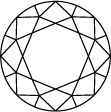
Internally flawless
VVS 1
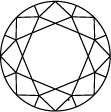
VVS 2
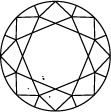
Very very slightly included
VS 1
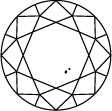
VS 2
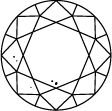
Very slightly included
SI 1
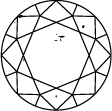
SI 2
Slightly included
I 1

I 2
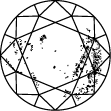
I 3
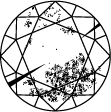
Included
Laboratory Grown Diamond Clarity Chart
Title:Diamond clarity scale and grades
Subtitle:
The diamond clarity scale is used to indicate the purity of a stone based on two naturally occurring characteristics: inclusions and blemishes. The number, nature, size, and location of external (blemishes) and internal (inclusions) features determine a diamond’s clarity rating. Diamond clarity grades are decided under standard viewing conditions with 10x magnification. IF is used to signify an internally flawless diamond while I3 stands for a diamond with obvious and visible inclusions.

What is Diamond Cut?
Cut quality depends on craftsmanship. The term refers to the way each diamond’s facets interact with the light and reveal its internal fire. Cut gives each stone its distinct personality, and perfecting the proportions, symmetry, and precise angles of laboratory grown diamonds ensures they are cut for maximum brilliance.
Cut Principles and Factors
The quality of a laboratory grown diamond cut is based on its proportions, symmetry, and polish. An expert cut results in several perfectly crafted facets that absorb and reflect the light so the stone scintillates from every angle. When assessing cut, graders consider the diamond’s face-up appearance, design, and craftsmanship.
Laboratory Grown Diamond Shapes
Swarovski Created Diamonds collections feature a range of different laboratory grown diamond shapes and cuts. The shape of a laboratory grown diamond refers to its outline or external form when viewed from above. Cut is a marker of quality, reflecting how well the stone has been faceted and polished as well as how the angles and proportions of each facet have been crafted to interact with the light. Choose one of our Swarovski Created Diamonds shapes to reflect your individual style and, as each stone is cut for brilliance, it will add luminosity to any look.
Color Principles and Factors
The most desirable diamond color is no color at all. Colorless stones are highly prized but they are also extremely rare, whereas lower quality diamonds can have a yellow or brown tone. The diamond color scale ranges from D to Z and Swarovski Created Diamonds collections only use laboratory grown diamonds with a color rating of D-G.
Colorless
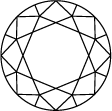
D-F
Near colorless
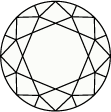
G-J
Slightly tinted
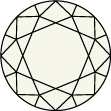
K-M
Very light color

N-R
Light color
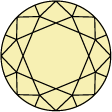
S-Z
Diamond color scale
Diamond color is rated on a scale from D to Z. D to F are used to denote colorless stones, while those in the S to Z categories appear in shades of light yellow or brown. Swarovski Created Diamonds jewelry only uses the finest laboratory grown diamonds, meaning they range from colorless to near colorless (D-G).

What is Diamond Carat Weight?
A carat is a unit of weight used to measure precious stones including laboratory grown diamonds. When comparing diamonds, one can have a higher carat without appearing larger, and two diamonds with the same carat weight can vary in size if one is cut deeper than the other. One carat weighs one-fifth of a gram and can be divided into 100 points.

2.5 mm
0.05 CT

3.0 mm
0.10 CT

3.8 mm
0.20 CT

4.5 mm
0.30 CT

4.8 mm
0.40 CT

5.2 mm
0.50 CT

5.8 mm
0.70 CT

6.3 mm
0.90 CT

6.5 mm
1.00 CT

6.9 mm
1.25 CT

7.4 mm
1.50 CT

7.8 mm
1.75 CT

8.2 mm
2.00 CT

8.8 mm
2.50 CT

9.4 mm
3.00 CT
Diamond Carat Weight Chart
Title:Laboratory grown diamond carat scale
Subtitle:
Carats are the international standard unit of measurement for the weight of a diamond. It derives from the word ‘carob’, a seed that was used as a diamond weight reference for traders in the ancient world. One carat is equal to 200 milligrams so a five carat diamond will weigh one gram. Diamond carat doesn’t equate to the size of a stone, it simply refers to how much it weighs, and diamonds usually become more expensive as their carat weight increases.
Quality Assured
Every laboratory grown diamond set in Swarovski Created Diamonds fine jewelry is assessed and certified by the IGI (International Gemological Institute), using the universally recognized 4Cs. The cut, clarity, color, and carat of each stone determines its quality and worth. Swarovski only uses high quality laboratory grown diamonds rated G+ in color and VS+ in clarity.
Discover Swarovski Created Diamonds

All About Swarovski Created Diamonds
Title:
Dive deeper into the world of Swarovski Created Diamonds. Explore collections that shine with traditional elegance to ones that take a fresh approach to diamond design.

Laboratory Grown Diamonds Buying Guide
Title:
Swarovski Created Diamonds fine jewelry collections feature distinctive designs that pair masterfully cut laboratory grown diamonds with precious metals.

What Are Laboratory Grown Diamonds?
Title:
Learn more about how diamonds can be grown in laboratory conditions using intense heat and pressure to perfectly replicate nature’s process.
Foire aux questions
Les 4C du diamant - FAQ
Que signifient les 4C ?
Aucun diamant ne ressemble à un autre. Chaque pierre possède ses caractéristiques propres. Tout comme les diamants naturels, nos diamants créés en laboratoire sont évalués selon quatre critères appelés 4C. Reconnus dans le monde entier par l’industrie diamantaire, ces 4C interviennent dans le contrôle qualité du diamant et se réfèrent à la taille (cut), la clarté (clarity), la couleur (color) et le caratage (carat).
La clarté du diamant est-elle importante ?
Plus le degré de clarté est élevé, plus le diamant aura de la valeur, car il contiendra moins d’inclusions et d’imperfections.
Quel est le degré de clarté le plus élevé du diamant ?
La clarté dépend de la pureté de la pierre qui, elle-même, repose sur deux critères visuels : les inclusions et les imperfections.
Afin d’évaluer sa clarté, le diamant est inspecté à l’aide d’une loupe de grossissement 10x. Le nombre et la nature des éléments externes (imperfections) et internes (inclusions), ainsi que leur taille et leur position déterminent le degré de clarté.
Les pierres sont classées par les gemmologues de la meilleure note, IF (sans défaut interne), à la moins bonne, I3 (Inclusions).
Afin d’évaluer sa clarté, le diamant est inspecté à l’aide d’une loupe de grossissement 10x. Le nombre et la nature des éléments externes (imperfections) et internes (inclusions), ainsi que leur taille et leur position déterminent le degré de clarté.
Les pierres sont classées par les gemmologues de la meilleure note, IF (sans défaut interne), à la moins bonne, I3 (Inclusions).
Les diamants de laboratoire sont-ils sans défaut ?
Non, presque tous les diamants (extraits ou créés en laboratoire) contiennent des inclusions. Les inclusions métalliques ne concernent que les diamants de laboratoire. Si une trace de métal est détectée, on peut ainsi supposer qu’il s’agit d’un diamant de laboratoire. Bien que les diamants créés en laboratoire possèdent des défauts, Swarovski n’utilise que les pierres de la plus haute qualité dans ses collections Swarovski Created Diamond, certifiées par l’IGI (International Gemological Institute) et les 4C.
Les diamants de laboratoire peuvent-ils perdre leur éclat ?
Non, les diamants de laboratoire ne perdent rien de leur éclat avec le temps. Strictement identiques aux diamants naturels, ils sont dotés des mêmes caractéristiques physiques et chimiques. Leur apparence ne s’altère pas avec le temps. Lorsque le grain de carbone utilisé est de qualité inférieure, certains diamants peuvent contenir des défauts apparents, comme des problèmes de tonalités, des impuretés ou des altérations. Les bijoux Swarovski Created Diamonds ne contiennent aucun diamant aux défauts artificiels.
Comment se passe la certification et l’évaluation des diamants créés en laboratoire ?
Les diamants de laboratoire servant à la création des bijoux Swarovski Created Diamonds sont sélectionnés à la main et examinés par des experts gemmologues qui s’assurent de leur conformité aux normes de la plus haute qualité. Chaque pièce des collections Galaxy et Eternity est accompagnée d’un certificat numérique émis par l’IGI (International Gemological Institute).
Qu’appelle-t-on facette du diamant ?
Les facettes représentent les surfaces planes qui créent la forme du diamant. Chacun se dote de multiples facettes capables d’absorber et de refléter la lumière.
De quelle manière définit-on la qualité de la taille ?
Lorsqu’on parle de taille, on pense souvent à la silhouette de la pierre (ronde, cœur, ovale, marquise ou poire), alors qu’elle fait référence à la façon dont ses facettes interagissent avec la lumière. En réalité, la taille correspond à la mesure de la qualité des proportions géométriques, de la forme et de la finition du diamant. Les brillants seront notés sur une échelle allant de Idéal à Médiocre. Swarovski ne fait aucun compromis sur la qualité de la taille pour que chaque diamant créé en laboratoire diffuse un maximum de lumière et d’éclat.
Quelle est la meilleure taille de diamant ?
La taille fait référence aux différentes manières dont les facettes interagissent avec la lumière pour révéler le feu intérieur du diamant. C’est elle qui confère au diamant sa personnalité, tandis que l’attention apportée aux proportions, à la symétrie et aux facettes de nos Swarovski Created Diamonds sublimera leur brillance. La taille parfaite offre le juste équilibre entre largeur et profondeur, pour créer une symétrie : ni trop plat, ni trop profond. L’objectif étant de créer le point de réfraction parfait pour que la lumière circule à l’intérieur du diamant et soit réfléchie tout en mettant en valeur son éclat.
Comment déterminer la couleur d’un diamant ?
La couleur fait référence à la teinte naturelle du diamant blanc. L’usage est de comparer la couleur de chaque diamant avec un échantillon de référence, puis d’attribuer à celui-ci une lettre, allant de D (incolore) à Z (jaune pâle).
Plus le diamant est incolore, meilleure sera jugée la qualité.
Plus le diamant est incolore, meilleure sera jugée la qualité.
Les diamants de laboratoire ont-ils des imperfections ?
Lorsque le grain de carbone utilisé est de qualité inférieure, certains diamants peuvent contenir des défauts apparents, comme des problèmes de tonalités, des impuretés ou des altérations. Swarovski ne commercialise pas de diamants aux défauts artificiels.
Qu’est-ce que le caratage ?
Un carat désigne l’unité de poids spécifiquement adaptée aux pierres précieuses, dont font partie nos diamants créés en laboratoire. Un diamant pourra posséder un caratage plus élevé sans nécessairement être plus volumineux. De la même façon, le calibre de deux diamants de caratages identiques pourra varier selon la profondeur de la taille. Un carat pèse un 1/5ème de gramme et se divise en centièmes.
Qu’est-ce que le caratage du diamant ? A-t-il une importance et comment le mesurer ?
Le carat est l’unité de mesure standard du diamant et le premier critère d’évaluation pour déterminer la valeur de celui-ci. Le caratage mesure le poids du diamant. Chaque carat se divise en centièmes, permettant une mesure des plus précises. Un diamant de moins d’un carat sera exprimé en centièmes. Plus le diamant est gros, plus il contiendra de carats. Mais savoir si cela le rend précieux à vos yeux reste une question très personnelle.
Un caratage élevé est-il préférable ?
C’est une question très personnelle. Si vous souhaitez acquérir un gros diamant, le caratage aura alors son importance car du poids dépend la taille de celui-ci.