

Vue d’ensemble du contenu
Vue d’ensemble du contenu
- Qu’est-ce que la clarté d’un diamant ?
- Tableau de pureté des diamants de synthèse
- Qu’est-ce que la taille ?
- Principes de taille des diamants
- Formes de diamants Swarovski
- Qu’est-ce que la couleur du diamant ?
- Tableau de couleur des diamants de synthèse
- Qu’est-ce que le caratage d’un diamant ?
- Tableau des poids en carats des diamants
Clarté : principes et facteurs
La pureté d’un diamant de synthèse est déterminée par ses imperfections. Chaque pierre a des inclusions et des défauts qui lui confèrent un caractère et un charme uniques, dont beaucoup ne sont visibles qu’au microscope. L’échelle de pureté des diamants va de Parfait (FL) à Inclusions (I3). À l’extrémité inférieure de l’échelle, les inclusions peuvent affecter la transparence, la brillance et la durabilité du diamant.

I.F.
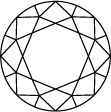
Sans défauts internes
VVS 1
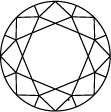
VVS 2
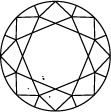
Minuscules inclusions
VS 1
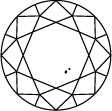
VS 2
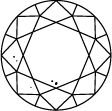
Très petites inclusions
SI 1
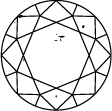
SI 2
Légères inclusions
I 1

I 2
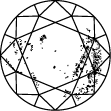
I 3
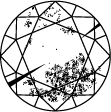
Inclusions
Tableau de pureté des diamants de synthèse
Title:Échelle d’évaluation de la clarté du diamant
Subtitle:
L’échelle de pureté des diamants est utilisée pour indiquer la pureté d’une pierre basée sur deux caractéristiques naturelles : les inclusions et les imperfections. Le nombre, la nature, la taille et l’emplacement des caractéristiques externes (imperfections) et internes (inclusions) déterminent la note de pureté d’un diamant. Les grades de pureté des diamants sont déterminés dans des conditions d’observation standard avec un grossissement de 10x. IF est utilisé pour signifier un diamant sans défauts internes tandis que I3 représente un diamant avec des inclusions évidentes et visibles.

Qu’est-ce que la taille ?
La qualité de la taille dépend du savoir-faire. Le terme fait référence à la façon dont chaque facette d’un diamant interagit avec la lumière et révèle son éclat intérieur. La taille donne à chaque pierre sa propre personnalité, ses proportions parfaites, sa symétrie. Chaque angle taillé avec précision confère à nos diamants de synthèse une brillance éclatante.
Taille : principes et facteurs
La qualité d’un diamant de synthèse dépend de ses proportions, de sa symétrie et de son polissage. Une taille experte permet d’obtenir plusieurs facettes parfaitement taillées qui absorbent et reflètent la lumière, de sorte que la pierre scintille sous tous les angles. Lors de l’évaluation de la taille, les experts considèrent l’apparence du diamant vue de dessus, son design et son savoir-faire.
Formes des diamants de synthèse
Les collections de Swarovski Created Diamonds présentent une gamme de différentes formes et tailles de diamants de synthèse. La forme d’un diamant de synthèse se réfère à son contour ou à sa forme externe, vue de dessus. La taille est un indicateur de qualité, reflétant la qualité du travail de facettage et de polissage, ainsi que la manière dont les angles et proportions de chaque facette ont été conçus pour interagir avec la lumière. Choisissez l’une de nos formes de Swarovski Created Diamonds pour refléter votre style individuel. Chaque pierre est taillée pour offrir la brillance, elle ajoutera de la luminosité à toutes vos tenues.
Couleur : principes et facteurs
La couleur la plus désirable pour un diamant est l’absence totale de couleur. Les pierres incolores sont très prisées mais elles sont également extrêmement rares, tandis que les diamants de moindre qualité peuvent avoir une teinte jaune ou marron. L’échelle de couleur des diamants va de D à Z et les collections Swarovski Created Diamonds n’utilisent que des diamants de synthèse ayant une classification de couleur de D à G.
Incolore
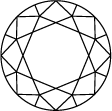
D-F
Presque incolore
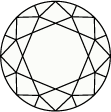
G-J
Légèrement teinté
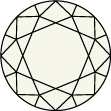
K-M
Très légèrement coloré

N-R
Légèrement coloré
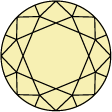
S-Z
Échelle de couleur des diamants
La couleur des diamants est classée sur une échelle allant de D à Z. Les D à F sont utilisés pour désigner des pierres incolores, tandis que celles des catégories S à Z apparaissent dans des nuances de jaune clair ou brun. Les bijoux Swarovski Created Diamonds sont exclusivement composés des diamants de synthèse de qualité supérieure, dont la notation est comprise entre D et G (incolore à presque incolore).

Qu’est-ce que le caratage ?
Un carat désigne l’unité de poids adaptée aux pierres précieuses, dont font partie nos diamants de synthèse. Lorsqu’on compare des diamants, il arrive qu’un diamant ait un poids en carats plus élevé sans nécessairement être plus volumineux. De la même façon, le calibre de deux diamants de caratages identiques pourra varier selon la profondeur de la taille. Un carat pèse un cinquième de gramme et peut être divisé en centièmes.

2,5 mm
0,05 CT

3,0 mm
0,10 CT

3,8 mm
0,20 CT

4,5 mm
0,30 CT

4,8 mm
0,40 CT

5,2 mm
0,50 CT

5,8 mm
0,70 CT

6,3 mm
0,90 CT

6,5 mm
1,00 CT

6,9 mm
1,25 CT

7,4 mm
1,50 CT

7,8 mm
1,75 CT

8,2 mm
2,00 CT

8,8 mm
2,50 CT

9,4 mm
3,00 CT
Tableau du caratage
Title:Échelle des carats des diamants de synthèse
Subtitle:
Le carat est l’unité de mesure standard internationale désignée pour mesurer le poids du diamant. Il fait référence à la graine de caroubier appelée caroube. Les marchands l’utilisaient déjà comme unité de mesure du diamant dans l’antiquité. Un carat équivaut à 200 milligrammes. Un diamant de cinq carats pèsera donc un gramme. Le carat d’un diamant ne correspond pas à la taille d’une pierre, il se réfère simplement à son poids, et les diamants deviennent généralement plus chers à mesure que leur poids en carats augmente.
Qualité assurée
Chaque diamant de synthèse serti dans les bijoux raffinés Swarovski Created Diamonds est évalué et certifié par l’IGI (Institut Gemmologique International), selon les critères des 4Cs universellement reconnus. La taille, la pureté, la couleur et le poids en carats de chaque pierre déterminent sa qualité et sa valeur. Swarovski utilise uniquement des diamants de synthèse de haute qualité classés G+ en couleur et VS+ en pureté.
Découvrez les Swarovski Created Diamonds

Tout savoir sur les Swarovski Created Diamonds
Title:
Plongez plus profondément dans l’univers des Swarovski Created Diamonds. Découvrez des collections qui allient l’élégance traditionnelle à des créations innovantes autour du diamant.

Guide d’achat des diamants de synthèse
Title:
Les collections de joaillerie Swarovski Created Diamonds présentent des créations originales qui associent des diamants de synthèse taillés avec brio à des métaux précieux.

Que sont les diamants de synthèse ?
Title:
Découvrez comment les diamants peuvent être créés en laboratoire grâce à une chaleur et une pression extrêmes pour reproduire parfaitement le processus de la nature.
Foire aux questions
Les 4C du diamant - FAQ
Que signifient les 4C ?
Aucun diamant ne ressemble à un autre. Chaque pierre possède ses caractéristiques propres. Tout comme les diamants naturels, nos diamants créés en laboratoire sont évalués selon quatre critères appelés 4C. Reconnus dans le monde entier par l’industrie diamantaire, ces 4C interviennent dans le contrôle qualité du diamant et se réfèrent à la taille (cut), la clarté (clarity), la couleur (color) et le caratage (carat).
La clarté du diamant est-elle importante ?
Plus le degré de clarté est élevé, plus le diamant aura de la valeur, car il contiendra moins d’inclusions et d’imperfections.
Quel est le degré de clarté le plus élevé du diamant ?
La clarté dépend de la pureté de la pierre qui, elle-même, repose sur deux critères visuels : les inclusions et les imperfections.
Afin d’évaluer sa clarté, le diamant est inspecté à l’aide d’une loupe de grossissement 10x. Le nombre et la nature des éléments externes (imperfections) et internes (inclusions), ainsi que leur taille et leur position déterminent le degré de clarté.
Les pierres sont classées par les gemmologues de la meilleure note, IF (sans défaut interne), à la moins bonne, I3 (Inclusions).
Afin d’évaluer sa clarté, le diamant est inspecté à l’aide d’une loupe de grossissement 10x. Le nombre et la nature des éléments externes (imperfections) et internes (inclusions), ainsi que leur taille et leur position déterminent le degré de clarté.
Les pierres sont classées par les gemmologues de la meilleure note, IF (sans défaut interne), à la moins bonne, I3 (Inclusions).
Les diamants de laboratoire sont-ils sans défaut ?
Non, presque tous les diamants (extraits ou créés en laboratoire) contiennent des inclusions. Les inclusions métalliques ne concernent que les diamants de laboratoire. Si une trace de métal est détectée, on peut ainsi supposer qu’il s’agit d’un diamant de laboratoire. Bien que les diamants créés en laboratoire possèdent des défauts, Swarovski n’utilise que les pierres de la plus haute qualité dans ses collections Swarovski Created Diamond, certifiées par l’IGI (International Gemological Institute) et les 4C.
Les diamants de laboratoire peuvent-ils perdre leur éclat ?
Non, les diamants de laboratoire ne perdent rien de leur éclat avec le temps. Strictement identiques aux diamants naturels, ils sont dotés des mêmes caractéristiques physiques et chimiques. Leur apparence ne s’altère pas avec le temps. Lorsque le grain de carbone utilisé est de qualité inférieure, certains diamants peuvent contenir des défauts apparents, comme des problèmes de tonalités, des impuretés ou des altérations. Les bijoux Swarovski Created Diamonds ne contiennent aucun diamant aux défauts artificiels.
Comment se passe la certification et l’évaluation des diamants créés en laboratoire ?
Les diamants de laboratoire servant à la création des bijoux Swarovski Created Diamonds sont sélectionnés à la main et examinés par des experts gemmologues qui s’assurent de leur conformité aux normes de la plus haute qualité. Chaque pièce des collections Galaxy et Eternity est accompagnée d’un certificat numérique émis par l’IGI (International Gemological Institute).
Qu’appelle-t-on facette du diamant ?
Les facettes représentent les surfaces planes qui créent la forme du diamant. Chacun se dote de multiples facettes capables d’absorber et de refléter la lumière.
De quelle manière définit-on la qualité de la taille ?
Lorsqu’on parle de taille, on pense souvent à la silhouette de la pierre (ronde, cœur, ovale, marquise ou poire), alors qu’elle fait référence à la façon dont ses facettes interagissent avec la lumière. En réalité, la taille correspond à la mesure de la qualité des proportions géométriques, de la forme et de la finition du diamant. Les brillants seront notés sur une échelle allant de Idéal à Médiocre. Swarovski ne fait aucun compromis sur la qualité de la taille pour que chaque diamant créé en laboratoire diffuse un maximum de lumière et d’éclat.
Quelle est la meilleure taille de diamant ?
La taille fait référence aux différentes manières dont les facettes interagissent avec la lumière pour révéler le feu intérieur du diamant. C’est elle qui confère au diamant sa personnalité, tandis que l’attention apportée aux proportions, à la symétrie et aux facettes de nos Swarovski Created Diamonds sublimera leur brillance. La taille parfaite offre le juste équilibre entre largeur et profondeur, pour créer une symétrie : ni trop plat, ni trop profond. L’objectif étant de créer le point de réfraction parfait pour que la lumière circule à l’intérieur du diamant et soit réfléchie tout en mettant en valeur son éclat.
Comment déterminer la couleur d’un diamant ?
La couleur fait référence à la teinte naturelle du diamant blanc. L’usage est de comparer la couleur de chaque diamant avec un échantillon de référence, puis d’attribuer à celui-ci une lettre, allant de D (incolore) à Z (jaune pâle).
Plus le diamant est incolore, meilleure sera jugée la qualité.
Plus le diamant est incolore, meilleure sera jugée la qualité.
Les diamants de laboratoire ont-ils des imperfections ?
Lorsque le grain de carbone utilisé est de qualité inférieure, certains diamants peuvent contenir des défauts apparents, comme des problèmes de tonalités, des impuretés ou des altérations. Swarovski ne commercialise pas de diamants aux défauts artificiels.
Qu’est-ce que le caratage ?
Un carat désigne l’unité de poids spécifiquement adaptée aux pierres précieuses, dont font partie nos diamants créés en laboratoire. Un diamant pourra posséder un caratage plus élevé sans nécessairement être plus volumineux. De la même façon, le calibre de deux diamants de caratages identiques pourra varier selon la profondeur de la taille. Un carat pèse un 1/5ème de gramme et se divise en centièmes.
Qu’est-ce que le caratage du diamant ? A-t-il une importance et comment le mesurer ?
Le carat est l’unité de mesure standard du diamant et le premier critère d’évaluation pour déterminer la valeur de celui-ci. Le caratage mesure le poids du diamant. Chaque carat se divise en centièmes, permettant une mesure des plus précises. Un diamant de moins d’un carat sera exprimé en centièmes. Plus le diamant est gros, plus il contiendra de carats. Mais savoir si cela le rend précieux à vos yeux reste une question très personnelle.
Un caratage élevé est-il préférable ?
C’est une question très personnelle. Si vous souhaitez acquérir un gros diamant, le caratage aura alors son importance car du poids dépend la taille de celui-ci.