

Índice de contenidos
Índice de contenidos
- ¿Qué es la pureza del diamante?
- Tabla de purezas de los diamantes creados en laboratorio
- ¿Qué es la talla del diamante?
- Principios de la talla de los diamantes
- Formas de diamantes de Swarovski
- ¿Qué es el color del diamante?
- Tabla de colores de los diamantes creados en laboratorio
- ¿Qué es el peso en quilates de un diamante?
- Tabla de pesos en quilates de diamantes
Principios y factores de la pureza
La pureza de un diamante creado en laboratorio viene determinada por sus imperfecciones. El carácter y el encanto irrepetibles de cada piedra dependen de sus inclusiones e imperfecciones, muchas de las cuales solo son visibles con microscopio. La escala de pureza de los diamantes varía de Perfecto (FL) a Con inclusiones (I3). En el extremo inferior de la escala, las inclusiones pueden afectar a la transparencia, el brillo y la durabilidad del diamante.

I.F.
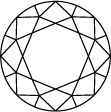
Interiormente perfecto
VVS 1
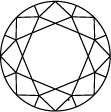
VVS 2
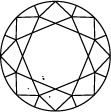
Inclusiones extremadamente pequeñas
VS 1
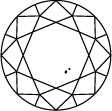
VS 2
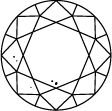
Inclusiones muy pequeñas
SI 1
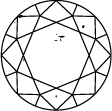
SI 2
Inclusiones pequeñas
I 1

I 2
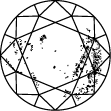
I 3
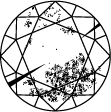
Con inclusiones
Tabla de purezas de los diamantes creados en laboratorio
Title:Clasificaciones y escala de la pureza de los diamantes
Subtitle:
La escala de pureza de los diamantes sirve para indicar la claridad de una piedra en función de dos características naturales: las inclusiones y las imperfecciones. El número, la naturaleza, el tamaño y la ubicación de las características externas (imperfecciones) e internas (inclusiones) establecen la clasificación de pureza de un diamante. Las clasificaciones de pureza de los diamantes vienen determinadas por las condiciones de visualización estándar con un aumento de 10×. “IF” indica un diamante internamente perfecto, mientras que “I3” representa un diamante con inclusiones evidentes y visibles.

¿Qué es la talla del diamante?
La calidad de la talla depende de la técnica artesanal empleada. El término se refiere a la forma en que las facetas de cada diamante interactúan con la luz y revelan su fuego interno. La talla le da a cada piedra una personalidad diferenciada. Y depurar las proporciones, la simetría y los ángulos precisos de los diamantes creados en laboratorio facilita que el tallado maximice el brillo.
Principios y factores de la talla
La calidad de la talla de un diamante creado en laboratorio se fundamenta en sus proporciones, simetría y pulido. Una talla experta significa elaborar varias facetas a la perfección que absorban y reflejen la luz, de modo que la piedra emita destellos desde cualquier ángulo. Al evaluar la talla, las personas especialistas en clasificación tienen en cuenta el aspecto visto desde arriba, el diseño y la técnica artesanal propios del diamante.
Formas de los diamantes creados en laboratorio
Las colecciones Swarovski Created Diamonds presentan una selección de formas y tallas de diamantes creados en laboratorio. La forma de un diamante creado en laboratorio se refiere a su contorno o forma externa vistos desde la corona. La talla es un indicador de calidad: refleja, por un lado, la perfección de las facetas de la piedra y el pulido de esta; y, por otro, el grado de elaboración de los ángulos y las proporciones de cada una de las facetas de modo que interactúen con la luz. Las formas de Swarovski Created Diamonds que tenemos en nuestro catálogo te permitirán reflejar el estilo que define tu personalidad. Además, al estar compuestas por piedras cuyas tallas maximizan el brillo, le darán ese toque de luminosidad extra a cualquier look.
Color Principles and Factors
The most desirable diamond color is no color at all. Colorless stones are highly prized but they are also extremely rare, whereas lower quality diamonds can have a yellow or brown tone. The diamond color scale ranges from D to Z and Swarovski Created Diamonds collections only use laboratory grown diamonds with a color rating of D-G.
Colorless
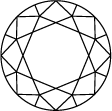
D-F
Near colorless
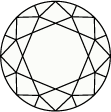
G-J
Slightly tinted
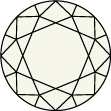
K-M
Very light color

N-R
Light color
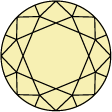
S-Z
Diamond color scale
Diamond color is rated on a scale from D to Z. D to F are used to denote colorless stones, while those in the S to Z categories appear in shades of light yellow or brown. Swarovski Created Diamonds jewelry only uses the finest laboratory grown diamonds, meaning they range from colorless to near colorless (D-G).

What is Diamond Carat Weight?
A carat is a unit of weight used to measure precious stones including laboratory grown diamonds. When comparing diamonds, one can have a higher carat without appearing larger, and two diamonds with the same carat weight can vary in size if one is cut deeper than the other. One carat weighs one-fifth of a gram and can be divided into 100 points.

2.5 mm
0.05 CT

3.0 mm
0.10 CT

3.8 mm
0.20 CT

4.5 mm
0.30 CT

4.8 mm
0.40 CT

5.2 mm
0.50 CT

5.8 mm
0.70 CT

6.3 mm
0.90 CT

6.5 mm
1.00 CT

6.9 mm
1.25 CT

7.4 mm
1.50 CT

7.8 mm
1.75 CT

8.2 mm
2.00 CT

8.8 mm
2.50 CT

9.4 mm
3.00 CT
Diamond Carat Weight Chart
Title:Laboratory grown diamond carat scale
Subtitle:
Carats are the international standard unit of measurement for the weight of a diamond. It derives from the word ‘carob’, a seed that was used as a diamond weight reference for traders in the ancient world. One carat is equal to 200 milligrams so a five carat diamond will weigh one gram. Diamond carat doesn’t equate to the size of a stone, it simply refers to how much it weighs, and diamonds usually become more expensive as their carat weight increases.
Quality Assured
Every laboratory grown diamond set in Swarovski Created Diamonds fine jewelry is assessed and certified by the IGI (International Gemological Institute), using the universally recognized 4Cs. The cut, clarity, color, and carat of each stone determines its quality and worth. Swarovski only uses high quality laboratory grown diamonds rated G+ in color and VS+ in clarity.
Discover Swarovski Created Diamonds

All About Swarovski Created Diamonds
Title:
Dive deeper into the world of Swarovski Created Diamonds. Explore collections that shine with traditional elegance to ones that take a fresh approach to diamond design.

Laboratory Grown Diamonds Buying Guide
Title:
Swarovski Created Diamonds fine jewelry collections feature distinctive designs that pair masterfully cut laboratory grown diamonds with precious metals.

What Are Laboratory Grown Diamonds?
Title:
Learn more about how diamonds can be grown in laboratory conditions using intense heat and pressure to perfectly replicate nature’s process.
Frequently asked questions
Diamond 4Cs FAQs
What are the 4Cs?
Jeder Diamant ist anders und hat seine ganz besonderen, unverkennbaren Merkmale. Im Labor gezüchtete Diamanten sind zu 100 % Diamanten und werden genau wie abgebaute Diamanten basierend auf dem 4C-Bewertungssystem eingestuft. Bei den 4C handelt es sich um Farbe (color), Reinheit (clarity), Schliff (cut), Karat (carat). Dieser internationale Standard wird für die Einstufung der Qualität von Diamanten eingesetzt.
Ist die Reinheit eines Diamanten wichtig?
Je höher die Einstufung, desto weniger Einschlüsse oder Mängel hat ein Diamant, was ihn zu einem hochwertigeren Edelstein macht als einen Diamanten mit einer niedrigeren Einstufung.
Was ist der höchste Reinheitsgrad für Diamanten?
Die Reinheit eines Diamanten wird basierend auf der Klarheit des Steins bewertet, wobei zwei Kriterien betrachtet werden: Einschlüsse und Fehler.
Zur Bewertung der Reinheit wird ein Diamant bei 10-facher Vergrößerung betrachtet. Die Anzahl und Natur von externen (Mängel) und internen Eigenschaften (Einschlüsse) sowie Größe und Position legen den Grad fest.
Gemmologen halten sich dabei an eine internationale Skala, angefangen bei Internally Flawless (I.F., makellos) als die höchste Qualitätsstufe, bis hin zu Included (I 3), das heißt mit Einschlüssen.
Zur Bewertung der Reinheit wird ein Diamant bei 10-facher Vergrößerung betrachtet. Die Anzahl und Natur von externen (Mängel) und internen Eigenschaften (Einschlüsse) sowie Größe und Position legen den Grad fest.
Gemmologen halten sich dabei an eine internationale Skala, angefangen bei Internally Flawless (I.F., makellos) als die höchste Qualitätsstufe, bis hin zu Included (I 3), das heißt mit Einschlüssen.
Sind im Labor gezüchtete Diamanten makellos?
Nein, fast alle Diamanten (abgebaute und im Labor gezüchtete) weisen Einschlüsse auf. Bei im Labor gezüchteten Diamanten kann es zu metallischen Einschlüssen kommen. Wenn ein Experte in einem Diamanten eine Spur von Metall erkennt, kann er davon ausgehen, dass dieser im Labor gezüchtet wurde. Obwohl auch im Labor gezüchtete Diamanten Mängel aufweisen können, verwendet Swarovski ausschließlich solche mit einer hohen Qualität, die vom International Gemological Institute (IGI) basierend auf dem 4C-System zertifiziert wurden. So stellen wir sicher, dass nur die hochwertigsten Diamanten für die Swarovski Created Diamonds Kollektionen verarbeitet werden.
Beschlagen im Labor gezüchtete Diamanten?
Nein, im Labor gezüchtete Diamanten beschlagen nicht im Laufe der Zeit. Sie gleichen zu 100 % natürlichen Diamanten, weisen dieselben physikalischen und chemischen Eigenschaften auf und sollten somit im Laufe der Zeit nicht degradieren oder ihr Aussehen verändern. Wenn minderwertige Diamantkeime verwendet wurden, können im Labor gezüchtete Diamanten offensichtliche Fehler aufweisen, wie Verfärbungen von Unreinheiten im Diamanten oder Makel in der kristallinen Struktur. Die für die Swarovski Created Diamonds Schmuckstücke verarbeiteten im Labor gezüchteten Diamanten weisen eine sehr hohe Qualität auf und haben keine unnatürlichen, problematischen Charakteristika.
Wie werden gezüchtete Diamanten zertifiziert und eingestuft?
Die im Labor gezüchteten Diamanten, die in den Swarovski Created Diamonds Schmuckstücken verarbeitet werden, sind handverlesen und von erfahrenen Gemmologen untersucht, um sicherzustellen, dass sie unsere hohen Qualitätsstandards erfüllen. Jedes einzelne Schmuckstück der Kollektionen Galaxy und Eternity wird von einem digitalen Laborbericht des International Gemological Institute (IGI) begleitet.
Was sind Diamantfacetten?
Diamantfacetten bezeichnen die ebenen Oberflächen, welche die Form des Diamanten bilden. Jeder Diamant hat zahlreiche Facetten, die es ihm ermöglichen, Licht zu absorbieren und zu reflektieren.
Wie wird die Diamantschliffqualität festgelegt?
Häufig stellen wir uns einen Diamantschliff als Form vor (rund, herzförmig, oval, Marquise, Tropfen). In Wirklichkeit bezeichnet Diamantschliff jedoch, wie gut die Facetten des Diamanten mit Licht interagieren. Der Schliff eines Diamanten ergibt die Qualität die Form, Geometrie und die Verarbeitung des Diamanten. Runde brillante Diamanten werden auf einer offiziellen Schliffskala bewertet, angefangen bei ideal (beste Stufe) bis hin zu schlecht. Swarovski macht keine Abstriche in Sachen Schliffqualität. Dies versichert, dass all unsere im Labor gezüchteten Diamanten eine optimale Lichtperformance und Brillanz aufweisen.
Was ist der beste Diamantschliff?
Der Schliff bezieht sich auf die Interaktion der verschiedenen Facetten eines Diamanten mit Licht, um sein inneres Feuer zu entfachen. Der Schliff verleiht jedem Diamanten seine einzigartige Persönlichkeit. Er optimiert die Proportionen, die Symmetrie und die Präzision des Schliffs von im Labor gezüchteten Diamanten und verleiht den Swarovski Created Diamonds ihre Brillanz. Der beste Schliff ist das optimale Gleichgewicht aus Breite und Tiefe, sodass Symmetrie entsteht, er ist weder zu flach noch zu tief. Es wird ein optimaler Brennpunkt für das Licht geschaffen, sodass dieses innerhalb des Diamanten reflektiert wird und seine polierte Strahlkraft unterstreicht.
Wie wird die Farbe eines Diamanten bestimmt?
Farbe bezeichnet bei weißen Diamanten den natürlichen Farbton. Der Branchenstandard für die Einstufung der Farbe wird verwendet, um jeden Diamanten basierend auf einer Referenzskala zu bewerten, um ihm anschließend einen Buchstaben von D (farblos) bis Z (hellgelb) zuzuweisen.
Je mehr sich der Diamant der Stufe farblos nähert, desto höher ist die Qualität.
Je mehr sich der Diamant der Stufe farblos nähert, desto höher ist die Qualität.
Weisen im Labor gezüchtete Diamanten Mängel auf?
Wurden minderwertige Diamantkeime verwendet, dann weisen manche im Labor gezüchteten Diamanten offensichtliche Mängel auf, wie Farbbeeinträchtigungen durch Unreinheiten oder strukturelle Fehler. Swarovski verkauft keine im Labor gezüchteten Diamanten mit unnatürlichen, problematischen Eigenschaften.
Was ist das Karatgewicht eines Diamanten?
Ein Karat ist eine Gewichtseinheit, die speziell dafür verwendet wird, um Edelsteine einzustufen, dies gilt auch für im Labor gezüchtete Diamanten. Ein Diamant kann ein höheres Karatgewicht haben, ohne größer als ein anderer mit einem geringeren Karatgewicht auszusehen. Zwei Diamanten mit demselben Karatgewicht können unterschiedlich groß sein, wenn einer davon tiefer geschliffen ist. Ein Karat wiegt 1/5 eines Gramms und wird in 100 Punkte aufgeteilt.
Was ist das Karatgewicht, wie wird es erfasst und wie wichtig ist es?
Das Karatgewicht ist die Standard-Gewichtseinheit für Diamanten und ist der erste Schritt des Evaluierungsverfahrens. Das Karatgewicht eines Diamanten gibt an, wie viel ein Diamant wiegt. Jedes Karat kann in 100 „Punkte“ unterteilt werden. Dies ermöglicht eine genaue Erfassung bis auf Hundertstel. Ein Diamant, der weniger wiegt als ein Karat, kann ausschließlich mit „Punkten“ eingestuft werden. Je größer ein Diamant ist, desto mehr Karat weist er in der Regel auf, doch nur Sie können entscheiden, wie wichtig Ihnen dieser Aspekt ist.
Ist ein hochkarätiger Diamant besser?
Das ist eine sehr persönliche Frage. Wenn Sie auf der Suche nach einem größeren Diamanten sind, dann sollten nach mehr Karat Ausschau halten, denn dies ist ein Hinweis auf das Gewicht und somit auf die Größe des Diamanten.