

Clarity Principles and Factors
The clarity of a laboratory grown diamond is determined by its flaws. Every stone has inclusions and blemishes that give it unique character and charm, many of which are only visible under a microscope. The diamond clarity scale ranges from Flawless (FL) to Included (I3). At the lower end of the scale, inclusions may affect the diamond’s transparency, brilliance, and durability.

I.F.
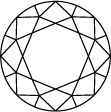
Internally flawless (intern feilloos)
VVS 1
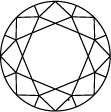
VVS 2
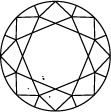
Very very slightly included (heel erg kleine inclusie)
VS 1
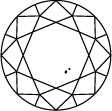
VS 2
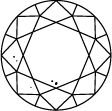
Very slightly included (zeer geringe inclusie)
SI 1
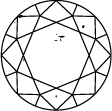
SI 2
Slightly included (lichte inclusie)
I 1

I 2
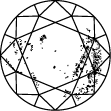
I 3
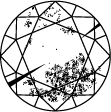
Included (insluitsel)
Helderheidsgrafiek voor laboratorium-diamanten
Title:Helderheidstabel en cijfers voor diamanten
Subtitle:
De schaal voor diamanthelderheid wordt gebruikt om de zuiverheid van een steen aan te geven, gebaseerd op twee natuurlijke kenmerken: insluitsels en onzuiverheden. Het aantal, de aard, grootte en locatie van externe (onzuiverheden) en interne (insluitsels) kenmerken bepalen de helderheidsbeoordeling van een diamant. Diamanthelderheidsgraden worden bepaald onder standaard kijkomstandigheden met 10x vergroting. IF wordt gebruikt om een inwendig vlekkeloze diamant aan te duiden, terwijl I3 staat voor een diamant met duidelijke en zichtbare insluitingen.

Wat betekent diamantslijpvorm?
De kwaliteit van de slijpvorm hangt af van vakmanschap. De term verwijst naar de manier waarop de facetten van een diamant het licht breken en zo het interne vuur onthullen. De slijpvorm geeft elke steen zijn unieke persoonlijkheid, en het perfectioneren van de verhoudingen, symmetrie en precieze hoeken van laboratorium-diamanten zorgt ervoor dat ze geslepen zijn voor maximale schittering.
Slijpvormprincipes en -factoren
De kwaliteit van een laboratorium-diamantslijpvorm is gebaseerd op zijn proporties, symmetrie en polijsting. Een vakkundige slijpvorm resulteert in meerdere perfect vervaardigde facetten die het licht absorberen en reflecteren zodat de steen vanuit elke hoek schittert. Bij het beoordelen van de slijpvorm, overwegen beoordelaars het bovenaanzicht, het ontwerp en het vakmanschap van de diamant.
Vormen van laboratorium-diamanten
De Swarovski Created Diamonds-collecties bevatten een reeks verschillende vormen en slijpvormen van laboratorium-diamanten. De vorm van een laboratorium-diamant verwijst naar zijn omtrek of uiterlijke vorm wanneer deze van bovenaf wordt bekeken. Slijpvorm is een kwaliteitskenmerk dat weerspiegelt hoe goed de steen is gefacetteerd en gepolijst, evenals hoe de hoeken en verhoudingen van elk facet zijn ontworpen om het licht te breken. Kies een van onze Swarovski Created Diamonds-vormen om uw unieke stijl te weerspiegelen. Omdat elke steen is geslepen voor maximale schittering, voorziet deze elke look van een stralende uitstraling.
Kleurprincipes en -factoren
De meest begeerde diamantkleur is helemaal geen kleur. Kleurloze stenen zijn zeer gewaardeerd, maar ze zijn ook uiterst zeldzaam, terwijl diamanten van lagere kwaliteit een gele of bruine toon kunnen hebben. De kleurenschaal van diamanten loopt van D tot Z en de Swarovski Created Diamonds-collecties gebruiken alleen laboratorium-diamanten met een kleurbepaling van D tot G.
Kleurloos
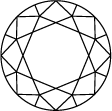
D-F
Vrijwel kleurloos
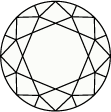
G-J
Enigszins getint
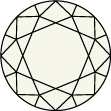
K-M
Zeer lichte kleur

N-R
Lichte kleur
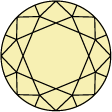
S-Z
Kleurenschaal voor diamanten
De kleur van diamanten wordt beoordeeld op een schaal van D tot Z. Diamanten in de klassen D tot F worden als kleurloos beschouwd, terwijl stenen in de categorieën S tot Z lichte gele of bruine tinten vertonen. Swarovski Created Diamonds-sieraden gebruiken alleen de fijnste laboratorium-diamanten, wat betekent dat ze variëren van kleurloos tot vrijwel kleurloos (D-G).

Wat is het karaatgewicht van een diamant?
Een karaat is een gewichtseenheid die wordt gebruikt om edelstenen, inclusief laboratorium-diamanten, te meten. Bij het vergelijken van diamanten kan de ene een hoger karaat hebben zonder groter te lijken, en twee diamanten met hetzelfde karaatgewicht kunnen in grootte variëren als de ene dieper is geslepen dan de andere. Eén karaat weegt een vijfde van een gram en kan worden verdeeld in 100 punten.

2,5 mm
0,05 CT

3 mm
0,10 CT

3,8 mm
0,20 CT

4,5 mm
0,30 CT

4,8 mm
0,40 CT

5,2 mm
0,50 CT

5,8 mm
0,70 CT

6,3 mm
0,90 CT

6,5 mm
1,00 CT

6,9 mm
1,25 CT

7,4 mm
1,50 CT

7,8 mm
1,75 CT

8,2 mm
2,00 CT

8,8 mm
2,50 CT

9,4 mm
3,00 CT
Karaatgewichtgrafiek voor diamanten
Title:Karaattabel laboratorium-diamanten
Subtitle:
Karaat is de internationale standaard eenheid voor het meten van het gewicht van een diamant. Het komt van het woord ‘carobe’, een zaad dat in de oude wereld door handelaren werd gebruikt als referentie voor het gewicht van een diamant. Eén karaat is gelijk aan 200 milligram, dus een diamant van vijf karaat weegt één gram. Diamantkaraat komt niet overeen met de grootte van een steen, het verwijst eenvoudigweg naar hoeveel het weegt, en diamanten worden meestal duurder naarmate hun karaatgewicht toeneemt.
Calidad asegurada
Todos y cada uno de los diamantes creados en laboratorio que se engarzan en la joyería fina Swarovski Created Diamonds se someten a la evaluación y la certificación del IGI (Instituto Gemológico Internacional) a partir de las 4 “C”, baremo reconocido en todo el mundo. La talla, la pureza, el color y los quilates de cada piedra determinan su calidad y valor. Swarovski solo utiliza diamantes creados en laboratorio de alta calidad con calificaciones G+ en color y VS+ en claridad.
Descubre Swarovski Created Diamonds

Todo sobre Swarovski Created Diamonds
Title:
Adéntrate más aún en el universo de los Swarovski Created Diamonds. Explora colecciones que brillan con elegancia tradicional y otras que destacan por el renovado diseño de los diamantes.

Guía de compra de diamantes creados en laboratorio
Title:
Las colecciones de joyería fina Swarovski Created Diamonds presentan diseños distintivos que combinan diamantes creados en laboratorio tallados de forma magistral con metales preciosos.

¿Qué son los diamantes creados en laboratorio?
Title:
Obtén más información sobre cómo creamos diamantes en condiciones de laboratorio aplicando calor y presión intensos, para replicar a la perfección el proceso de la naturaleza.
Preguntas frecuentes
Preguntas frecuentes de las 4 “C” del diamante
¿Qué son las 4 C?
Cada diamante se diferencia un poco del resto y tiene sus propias características distintivas. Los diamantes creados en laboratorio son diamantes 100 %. Como los diamantes extraídos, nuestros diamantes creados en laboratorio se evalúan conforme a las 4 C de calificación de diamantes. Las 4C son color, pureza, talla y peso en quilates, que son los estándares aceptados internacionalmente para valorar la calidad de un diamante.
¿La pureza del diamante es importante?
Cuando mayor sea la calificación de pureza, menos inclusiones e imperfecciones tendrá el diamante, lo que hará que tenga más valor que uno de menor calificación.
¿Cuál es la pureza máxima del diamante?
La pureza del diamante es la medida de pureza de la piedra que se califica por la visibilidad de dos características: las inclusiones y las imperfecciones.
Para valorar la pureza, el diamante se observa bajo un aumento de 10x. El número y la naturaleza de las características externas (imperfecciones) e internas (inclusiones), así como el tamaño y la posición, determinan su calificación.
Los gemólogos califican el diamante desde Internamente perfecto (IF), que es el de máxima calidad, hasta Con inclusiones (I3).
Para valorar la pureza, el diamante se observa bajo un aumento de 10x. El número y la naturaleza de las características externas (imperfecciones) e internas (inclusiones), así como el tamaño y la posición, determinan su calificación.
Los gemólogos califican el diamante desde Internamente perfecto (IF), que es el de máxima calidad, hasta Con inclusiones (I3).
¿Los diamantes creados en laboratorio son perfectos?
No, prácticamente todos los diamantes (extraídos o creados en laboratorio) tienen inclusiones. Los diamantes creados en laboratorio pueden contener inclusiones metálicas. Si un experto identifica una traza de metal en un diamante, sobreentenderá que se trata de un diamante creado en laboratorio. Los diamantes creados en laboratorio pueden tener defectos, pero Swarovski solo utiliza diamantes creados en laboratorio de la máxima calidad certificados por el Instituto Gemológico Internacional (IGI) según las 4 C, con el fin de garantizar que solo se incluyan los diamantes de más calidad en las colecciones Swarovski Created Diamond.
¿Los diamantes creados en laboratorio se vuelven opacos con el tiempo?
No, los diamantes creados en laboratorio no se opacan con el paso del tiempo. Son 100 % iguales que los diamantes con las mismas propiedades físicas y químicas, de manera que no deben degradarse ni cambiar de aspecto con el paso del tiempo. Si se utilizan semillas de mala calidad, algunos diamantes creados en laboratorio pueden contener defectos evidentes, como trazas de color por impurezas o una estructura del cristal imperfecta. Los diamantes creados en laboratorio desarrollados en la joyería Swarovski Created Diamonds responden a un estándar de la más alta calidad y no tienen características no naturales o que puedan causar problemas.
¿Cómo se califican y se certifican los diamantes creados en laboratorio?
Los diamantes creados en laboratorio procesados en la joyería de Swarovski Created Diamonds se seleccionan manualmente y los examinan gemólogos expertos para garantizar que cumplan con los más altos estándares de calidad. Cada pieza de joyería de las colecciones Galaxy y Eternity se acompaña de un informe de laboratorio digital emitido por el Instituto Gemológico Internacional (IGI).
¿Qué son las facetas de un diamante?
Las facetas de un diamante son cada superficie facetada que crea la forma del diamante. Un diamante tiene varias facetas que absorben y reflejan la luz.
¿Cómo se determina la calidad de la talla de un diamante?
Generalmente, pensamos que la talla de un diamante hace referencia a su forma (redondo, ovalado, en corazón, marquesa, pera). Sin embargo, la talla del diamante significa lo bien que interactúan las facetas del diamante con la luz. La talla de un diamante es la medida de calidad de la forma, la geometría y el acabado del diamante. Los diamantes redondos brillantes reciben una calificación de talla oficial en una escala que va desde Ideal (el máximo) a Pobre. Swarovski se compromete con la calidad de la talla para garantizar que nuestros diamantes creados en laboratorio tienen un brillo y un reflejo de la luz inmejorables.
¿Cuál es la mejor talla de diamante?
La talla significa la manera en como las facetas del diamante interactúan con la luz para revelar un fuego interior. La talla aporta la personalidad al diamante. Con la mejora de las proporciones, la simetría y los ángulos de corte precisos, los Swarovski Created Diamonds ofrecen un brillo único. La mejor talla mantiene el equilibrio entre anchura y profundidad para crear una simetría ni demasiado superficial ni demasiado profunda. Se crea un punto de refracción perfecto de la luz a través del diamante, que a su vez se refleja dentro del diamante y potencia todo su brillo pulido.
¿Cómo se determina el color de un diamante?
El color hace referencia al tinte natural inherente de los diamantes blancos. El estándar industrial para calificar el color se basa en evaluar cada diamante respecto a un conjunto maestro y asignarle una letra de calificación de la D (incoloro) a la Z (amarillo suave).
Cuanto más incoloro sea el diamante, más calidad tendrá.
Cuanto más incoloro sea el diamante, más calidad tendrá.
¿Los diamantes creados en laboratorio tienen imperfecciones?
Si se utilizan semillas de diamante de mala calidad, los diamantes creados en laboratorio pueden contener defectos evidentes, como matices de color debidos a impurezas o imperfecciones estructurales. Swarovski no vende diamantes creados en laboratorio con características antinaturales y que puedan causar problemas.
¿Qué es el peso en quilates de un diamante?
Un quilate es una unidad de peso que se utiliza para medir piedras preciosas, incluidos los diamantes creados en laboratorio. Un diamante puede tener un mayor peso en quilates y no ser más grande, y dos diamantes con los mismos quilates pueden variar de medida si uno tiene una talla más profunda que el otro. Un quilate pesa 1/5 de un gramo y se divide en 100 puntos.
¿Qué es el peso en quilates de un diamante, cómo se mide y qué importancia tiene?
El peso en quilates es la unidad de peso estándar del diamante y el primer paso en el proceso de calificación. El peso en quilates de un diamante es la medida de peso de un diamante. Cada quilate se subdivide en 100 «puntos», lo que permite realizar mediciones precisas hasta la centésima parte. El peso de un diamante menor a un quilate puede describirse solo por sus «puntos». Cuanto más grande sea el diamante, más quilates pesará. Pero la importancia que tenga para ti, solo la decides tú.
¿Es mejor comprar un diamante con más quilates?
Es una cuestión muy personal. Si quieres un diamante más grande, busca un diamante con más quilates, ya que esto indica su peso y, por ende, su tamaño.