

Clarity Principles and Factors
The clarity of a laboratory grown diamond is determined by its flaws. Every stone has inclusions and blemishes that give it unique character and charm, many of which are only visible under a microscope. The diamond clarity scale ranges from Flawless (FL) to Included (I3). At the lower end of the scale, inclusions may affect the diamond’s transparency, brilliance, and durability.

I.F.
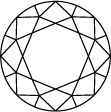
Internally flawless
VVS 1
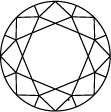
VVS 2
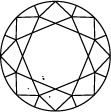
Very very slightly included
VS 1
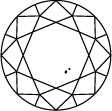
VS 2
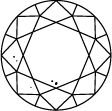
Very slightly included
SI 1
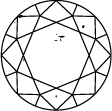
SI 2
Slightly included
I 1

I 2
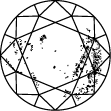
I 3
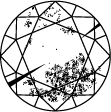
Included
Laboratory Grown Diamond Clarity Chart
Title:Diamond clarity scale and grades
Subtitle:
The diamond clarity scale is used to indicate the purity of a stone based on two naturally occurring characteristics: inclusions and blemishes. The number, nature, size, and location of external (blemishes) and internal (inclusions) features determine a diamond’s clarity rating. Diamond clarity grades are decided under standard viewing conditions with 10x magnification. IF is used to signify an internally flawless diamond while I3 stands for a diamond with obvious and visible inclusions.

What is Diamond Cut?
Cut quality depends on craftsmanship. The term refers to the way each diamond’s facets interact with the light and reveal its internal fire. Cut gives each stone its distinct personality, and perfecting the proportions, symmetry, and precise angles of laboratory grown diamonds ensures they are cut for maximum brilliance.
Cut Principles and Factors
The quality of a laboratory grown diamond cut is based on its proportions, symmetry, and polish. An expert cut results in several perfectly crafted facets that absorb and reflect the light so the stone scintillates from every angle. When assessing cut, graders consider the diamond’s face-up appearance, design, and craftsmanship.
Laboratory Grown Diamond Shapes
Swarovski Created Diamonds collections feature a range of different laboratory grown diamond shapes and cuts. The shape of a laboratory grown diamond refers to its outline or external form when viewed from above. Cut is a marker of quality, reflecting how well the stone has been faceted and polished as well as how the angles and proportions of each facet have been crafted to interact with the light. Choose one of our Swarovski Created Diamonds shapes to reflect your individual style and, as each stone is cut for brilliance, it will add luminosity to any look.
Color Principles and Factors
The most desirable diamond color is no color at all. Colorless stones are highly prized but they are also extremely rare, whereas lower quality diamonds can have a yellow or brown tone. The diamond color scale ranges from D to Z and Swarovski Created Diamonds collections only use laboratory grown diamonds with a color rating of D-G.
Colorless
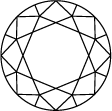
D-F
Near colorless
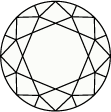
G-J
Slightly tinted
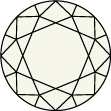
K-M
Very light color

N-R
Light color
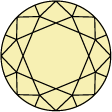
S-Z
Diamond color scale
Diamond color is rated on a scale from D to Z. D to F are used to denote colorless stones, while those in the S to Z categories appear in shades of light yellow or brown. Swarovski Created Diamonds jewelry only uses the finest laboratory grown diamonds, meaning they range from colorless to near colorless (D-G).

What is Diamond Carat Weight?
A carat is a unit of weight used to measure precious stones including laboratory grown diamonds. When comparing diamonds, one can have a higher carat without appearing larger, and two diamonds with the same carat weight can vary in size if one is cut deeper than the other. One carat weighs one-fifth of a gram and can be divided into 100 points.

2,5 mm
0,05 CT

3,0 mm
0,10 CT

3,8 mm
0,20 CT

4,5 mm
0,30 CT

4,8 mm
0,40 CT

5,2 mm
0,50 CT

5,8 mm
0,70 CT

6,3 mm
0,90 CT

6,5 mm
1,00 CT

6,9 mm
1,25 CT

7,4 mm
1,50 CT

7,8 mm
1,75 CT

8,2 mm
2,00 CT

8,8 mm
2,50 CT

9,4 mm
3,00 CT
Tableau du caratage
Title:Échelle des carats des diamants de synthèse
Subtitle:
Le carat est l’unité de mesure standard internationale désignée pour mesurer le poids du diamant. Il fait référence à la graine de caroubier appelée caroube. Les marchands l’utilisaient déjà comme unité de mesure du diamant dans l’antiquité. Un carat équivaut à 200 milligrammes. Un diamant de cinq carats pèsera donc un gramme. Le carat d’un diamant ne correspond pas à la taille d’une pierre, il se réfère simplement à son poids, et les diamants deviennent généralement plus chers à mesure que leur poids en carats augmente.
Qualité assurée
Jeder im Labor gezüchtete Diamant, der in Swarovski Created Diamonds Echtschmuck gefasst wird, wird vom IGI (International Gemological Institute) anhand der weltweit anerkannten 4C geprüft und zertifiziert. Schliff, Reinheit, Farbe und Karat eines jeden Steins bestimmen seine Qualität und seinen Wert. Swarovski verwendet ausschließlich hochwertige im Labor gezüchtete Diamanten mit einem Farbgrad von G oder höher und einem Reinheitsgrad von VS oder höher.
Entdecken Sie Swarovski Created Diamonds

Alles über Swarovski Created Diamonds
Title:
Tauchen Sie tiefer in die Welt von Swarovski Created Diamonds ein. Entdecken Sie Kollektionen, die von traditioneller Eleganz geprägt sind, und Designs, die Diamantschmuck neu interpretieren.

Leitfaden für im Labor gezüchtete Diamanten
Title:
Die Echtschmuckkollektionen von Swarovski Created Diamonds zeichnen sich durch unverwechselbare Designs aus, die meisterhaft geschliffene, im Labor gezüchtete Diamanten mit Edelmetallen verbinden.

Was sind im Labor gezüchtete Diamanten?
Title:
Erfahren Sie mehr darüber, wie Diamanten unter Laborbedingungen mithilfe intensiver Hitze und hohen Drucks gezüchtet werden können, um den natürlichen Entstehungsprozess präzise nachzubilden.
Häufig gestellte Fragen
FAQ zum 4C-Qualitätssystem
Was sind die 4C?
Jeder Diamant ist anders und hat seine ganz besonderen, unverkennbaren Merkmale. Im Labor gezüchtete Diamanten sind zu 100 % Diamanten und werden genau wie abgebaute Diamanten basierend auf dem 4C-Bewertungssystem eingestuft. Bei den 4C handelt es sich um Farbe (color), Reinheit (clarity), Schliff (cut), Karat (carat). Dieser internationale Standard wird für die Einstufung der Qualität von Diamanten eingesetzt.
Ist die Reinheit eines Diamanten wichtig?
Je höher die Einstufung, desto weniger Einschlüsse oder Mängel hat ein Diamant, was ihn zu einem hochwertigeren Edelstein macht als einen Diamanten mit einer niedrigeren Einstufung.
Was ist der höchste Reinheitsgrad für Diamanten?
Die Reinheit eines Diamanten wird basierend auf der Klarheit des Steins bewertet, wobei zwei Kriterien betrachtet werden: Einschlüsse und Fehler.
Zur Bewertung der Reinheit wird ein Diamant bei 10-facher Vergrößerung betrachtet. Die Anzahl und Natur von externen (Mängel) und internen Eigenschaften (Einschlüsse) sowie Größe und Position legen den Grad fest.
Gemmologen halten sich dabei an eine internationale Skala, angefangen bei Internally Flawless (I.F., makellos) als die höchste Qualitätsstufe, bis hin zu Included (I 3), das heißt mit Einschlüssen.
Zur Bewertung der Reinheit wird ein Diamant bei 10-facher Vergrößerung betrachtet. Die Anzahl und Natur von externen (Mängel) und internen Eigenschaften (Einschlüsse) sowie Größe und Position legen den Grad fest.
Gemmologen halten sich dabei an eine internationale Skala, angefangen bei Internally Flawless (I.F., makellos) als die höchste Qualitätsstufe, bis hin zu Included (I 3), das heißt mit Einschlüssen.
Sind im Labor gezüchtete Diamanten makellos?
Nein, fast alle Diamanten (abgebaute und im Labor gezüchtete) weisen Einschlüsse auf. Bei im Labor gezüchteten Diamanten kann es zu metallischen Einschlüssen kommen. Wenn ein Experte in einem Diamanten eine Spur von Metall erkennt, kann er davon ausgehen, dass dieser im Labor gezüchtet wurde. Obwohl auch im Labor gezüchtete Diamanten Mängel aufweisen können, verwendet Swarovski ausschließlich solche mit einer hohen Qualität, die vom International Gemological Institute (IGI) basierend auf dem 4C-System zertifiziert wurden. So stellen wir sicher, dass nur die hochwertigsten Diamanten für die Swarovski Created Diamonds Kollektionen verarbeitet werden.
Beschlagen im Labor gezüchtete Diamanten?
Nein, im Labor gezüchtete Diamanten beschlagen nicht im Laufe der Zeit. Sie gleichen zu 100 % natürlichen Diamanten, weisen dieselben physikalischen und chemischen Eigenschaften auf und sollten somit im Laufe der Zeit nicht degradieren oder ihr Aussehen verändern. Wenn minderwertige Diamantkeime verwendet wurden, können im Labor gezüchtete Diamanten offensichtliche Fehler aufweisen, wie Verfärbungen von Unreinheiten im Diamanten oder Makel in der kristallinen Struktur. Die für die Swarovski Created Diamonds Schmuckstücke verarbeiteten im Labor gezüchteten Diamanten weisen eine sehr hohe Qualität auf und haben keine unnatürlichen, problematischen Charakteristika.
Wie werden gezüchtete Diamanten zertifiziert und eingestuft?
Die im Labor gezüchteten Diamanten, die in den Swarovski Created Diamonds Schmuckstücken verarbeitet werden, sind handverlesen und von erfahrenen Gemmologen untersucht, um sicherzustellen, dass sie unsere hohen Qualitätsstandards erfüllen. Jedes einzelne Schmuckstück der Kollektionen Galaxy und Eternity wird von einem digitalen Laborbericht des International Gemological Institute (IGI) begleitet.
Was sind Diamantfacetten?
Diamantfacetten bezeichnen die ebenen Oberflächen, welche die Form des Diamanten bilden. Jeder Diamant hat zahlreiche Facetten, die es ihm ermöglichen, Licht zu absorbieren und zu reflektieren.
Wie wird die Diamantschliffqualität festgelegt?
Häufig stellen wir uns einen Diamantschliff als Form vor (rund, herzförmig, oval, Marquise, Tropfen). In Wirklichkeit bezeichnet Diamantschliff jedoch, wie gut die Facetten des Diamanten mit Licht interagieren. Der Schliff eines Diamanten ergibt die Qualität die Form, Geometrie und die Verarbeitung des Diamanten. Runde brillante Diamanten werden auf einer offiziellen Schliffskala bewertet, angefangen bei ideal (beste Stufe) bis hin zu schlecht. Swarovski macht keine Abstriche in Sachen Schliffqualität. Dies versichert, dass all unsere im Labor gezüchteten Diamanten eine optimale Lichtperformance und Brillanz aufweisen.
Was ist der beste Diamantschliff?
Der Schliff bezieht sich auf die Interaktion der verschiedenen Facetten eines Diamanten mit Licht, um sein inneres Feuer zu entfachen. Der Schliff verleiht jedem Diamanten seine einzigartige Persönlichkeit. Er optimiert die Proportionen, die Symmetrie und die Präzision des Schliffs von im Labor gezüchteten Diamanten und verleiht den Swarovski Created Diamonds ihre Brillanz. Der beste Schliff ist das optimale Gleichgewicht aus Breite und Tiefe, sodass Symmetrie entsteht, er ist weder zu flach noch zu tief. Es wird ein optimaler Brennpunkt für das Licht geschaffen, sodass dieses innerhalb des Diamanten reflektiert wird und seine polierte Strahlkraft unterstreicht.
Wie wird die Farbe eines Diamanten bestimmt?
Farbe bezeichnet bei weißen Diamanten den natürlichen Farbton. Der Branchenstandard für die Einstufung der Farbe wird verwendet, um jeden Diamanten basierend auf einer Referenzskala zu bewerten, um ihm anschließend einen Buchstaben von D (farblos) bis Z (hellgelb) zuzuweisen.
Je mehr sich der Diamant der Stufe farblos nähert, desto höher ist die Qualität.
Je mehr sich der Diamant der Stufe farblos nähert, desto höher ist die Qualität.
Weisen im Labor gezüchtete Diamanten Mängel auf?
Wurden minderwertige Diamantkeime verwendet, dann weisen manche im Labor gezüchteten Diamanten offensichtliche Mängel auf, wie Farbbeeinträchtigungen durch Unreinheiten oder strukturelle Fehler. Swarovski verkauft keine im Labor gezüchteten Diamanten mit unnatürlichen, problematischen Eigenschaften.
Was ist das Karatgewicht eines Diamanten?
Ein Karat ist eine Gewichtseinheit, die speziell dafür verwendet wird, um Edelsteine einzustufen, dies gilt auch für im Labor gezüchtete Diamanten. Ein Diamant kann ein höheres Karatgewicht haben, ohne größer als ein anderer mit einem geringeren Karatgewicht auszusehen. Zwei Diamanten mit demselben Karatgewicht können unterschiedlich groß sein, wenn einer davon tiefer geschliffen ist. Ein Karat wiegt 1/5 eines Gramms und wird in 100 Punkte aufgeteilt.
Was ist das Karatgewicht, wie wird es erfasst und wie wichtig ist es?
Das Karatgewicht ist die Standard-Gewichtseinheit für Diamanten und ist der erste Schritt des Evaluierungsverfahrens. Das Karatgewicht eines Diamanten gibt an, wie viel ein Diamant wiegt. Jedes Karat kann in 100 „Punkte“ unterteilt werden. Dies ermöglicht eine genaue Erfassung bis auf Hundertstel. Ein Diamant, der weniger wiegt als ein Karat, kann ausschließlich mit „Punkten“ eingestuft werden. Je größer ein Diamant ist, desto mehr Karat weist er in der Regel auf, doch nur Sie können entscheiden, wie wichtig Ihnen dieser Aspekt ist.
Ist ein hochkarätiger Diamant besser?
Das ist eine sehr persönliche Frage. Wenn Sie auf der Suche nach einem größeren Diamanten sind, dann sollten nach mehr Karat Ausschau halten, denn dies ist ein Hinweis auf das Gewicht und somit auf die Größe des Diamanten.