


In the Amazon
Title:Supporting communities along one of the world’s longest rivers
Subtitle: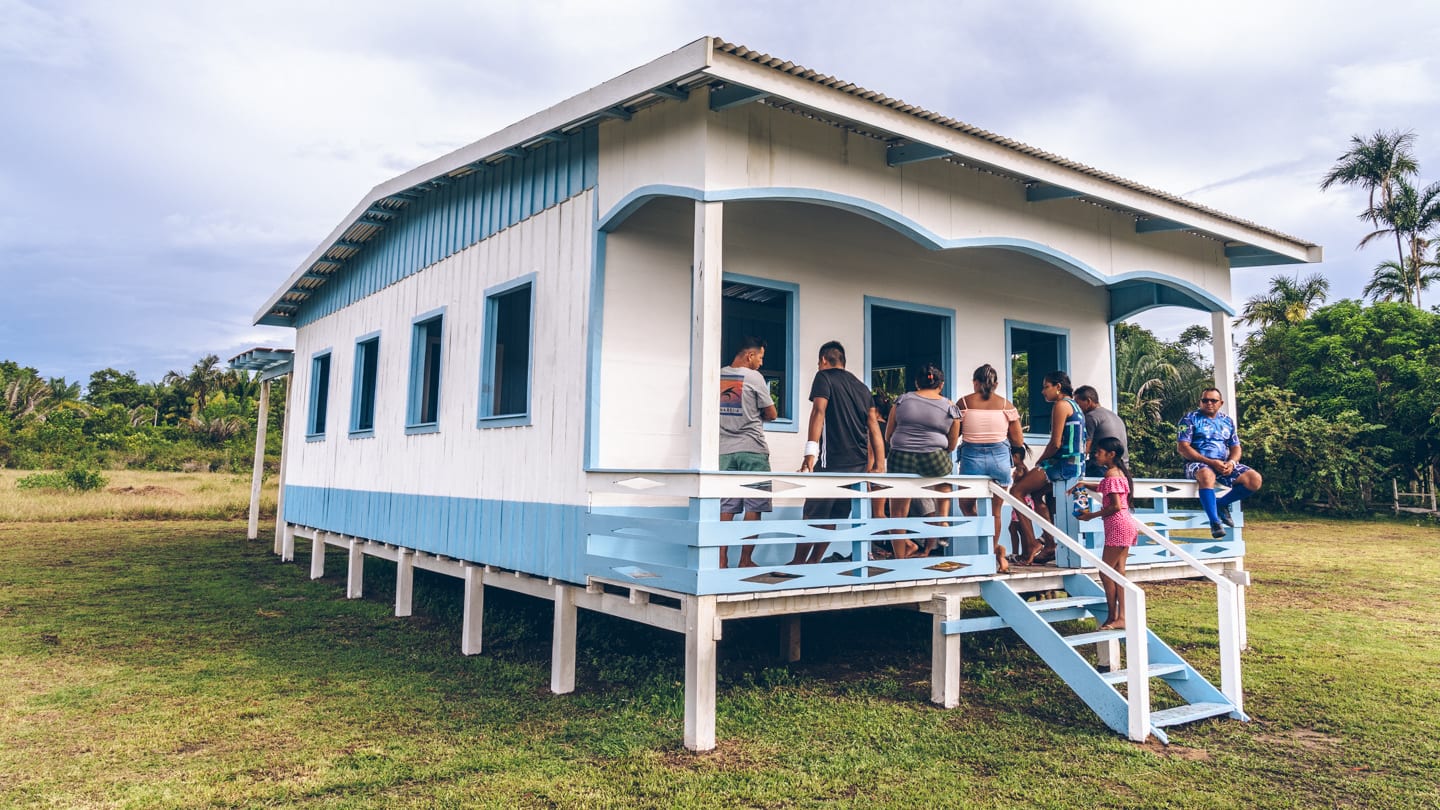
Water World
Title:Amazon River
Subtitle:
Winding its way through the top of South America, the Amazon River is well-known for its incredible length (4,225 miles) and its importance to biodiversity and natural resources. 20% of the world’s fresh water comes from this impressive river, and its banks and waters are home to countless animal and fish species. Local and Indigenous communities rely on the river as a daily source of food, water, income, and transportation.
Unfortunately, the world, and the people living along the Amazon River basin, are at risk of losing this vital resource as the river succumbs to the effects of climate change and deforestation. If the Amazon were to dry up, the impact on the water cycle would be felt worldwide.
Swarovski Waterschool Brazil
Since 2016, Swarovski Waterschool Brazil has been working to transform and protect the Amazon River and its riverine communities. During the first two years, the project designed and tested an educational methodology to change the attitudes and practices of proper water treatment along the river. This included 45 different experiential activities focused on the themes of hygiene, hydration, sanitation, and water consumption and pollution.
The project currently works with 28 rural communities, which are home to around 3,715 people. Within these communities, the Swarovski Waterschool is involved with 20 different schools. Each community is located by a river or a lake and can only be accessed by boat. In many of these communities, it is common to drink water directly from the river. If the water is not treated properly, this can lead to dangerous diseases.
At the start of the program, 14 of the schools had no access to running or stored water; 16 lacked handwashing structures; 13 had no toilets; and six were without a school building. To tackle these challenges, the project began by either improving or building anew the infrastructure of these schools. This included building bathrooms, creating a filtering system that used rainwater collection and pumps, and renovating the schools’ water systems. In nearly all cases, the improvements to the school benefitted the surrounding village as well, as community members adopted the same water treatment practices in their own homes.
Currently, the project has trained 454 teachers in the Amazonas state. The long-term goal is to promote a large swathe of water-wise communities that implement sustainable water management practices that will improve the health and livelihood of the riverine communities, as well as the vitality of the Amazon River.
Unfortunately, the world, and the people living along the Amazon River basin, are at risk of losing this vital resource as the river succumbs to the effects of climate change and deforestation. If the Amazon were to dry up, the impact on the water cycle would be felt worldwide.
Swarovski Waterschool Brazil
Since 2016, Swarovski Waterschool Brazil has been working to transform and protect the Amazon River and its riverine communities. During the first two years, the project designed and tested an educational methodology to change the attitudes and practices of proper water treatment along the river. This included 45 different experiential activities focused on the themes of hygiene, hydration, sanitation, and water consumption and pollution.
The project currently works with 28 rural communities, which are home to around 3,715 people. Within these communities, the Swarovski Waterschool is involved with 20 different schools. Each community is located by a river or a lake and can only be accessed by boat. In many of these communities, it is common to drink water directly from the river. If the water is not treated properly, this can lead to dangerous diseases.
At the start of the program, 14 of the schools had no access to running or stored water; 16 lacked handwashing structures; 13 had no toilets; and six were without a school building. To tackle these challenges, the project began by either improving or building anew the infrastructure of these schools. This included building bathrooms, creating a filtering system that used rainwater collection and pumps, and renovating the schools’ water systems. In nearly all cases, the improvements to the school benefitted the surrounding village as well, as community members adopted the same water treatment practices in their own homes.
Currently, the project has trained 454 teachers in the Amazonas state. The long-term goal is to promote a large swathe of water-wise communities that implement sustainable water management practices that will improve the health and livelihood of the riverine communities, as well as the vitality of the Amazon River.
Some schools in Amazonas state received their first-ever bathrooms and handwashing stations.
Title:


São Raimundo – from zero to drinkable water
Title:
Sometimes, there is no existing solution that fits the local reality, so the Swarovski Waterschool has to develop it. In São Raimundo, the first solution needed was in regard to water collection and distribution.
Up until November 2020, the Indigenous community of São Raimundo sourced their water directly from the lake, carried in buckets up and down steep dirt paths by women and children. Not only was this a laborious task, it also created a gender imbalance.
Inspired by the ideas of the community’s chief, the Swarovski Waterschool installed water taps in each house to alleviate this challenge. However, these taps then faced a new problem: the pump for the taps relied on diesel fuel, which was expensive for the community to maintain. Furthermore, the water was still being consumed without proper treatment.
The following year, the project combined efforts with a group of engineers to develop a system that used solar energy to pump, filter, and purify the water to make it drinkable.
Up until November 2020, the Indigenous community of São Raimundo sourced their water directly from the lake, carried in buckets up and down steep dirt paths by women and children. Not only was this a laborious task, it also created a gender imbalance.
Inspired by the ideas of the community’s chief, the Swarovski Waterschool installed water taps in each house to alleviate this challenge. However, these taps then faced a new problem: the pump for the taps relied on diesel fuel, which was expensive for the community to maintain. Furthermore, the water was still being consumed without proper treatment.
The following year, the project combined efforts with a group of engineers to develop a system that used solar energy to pump, filter, and purify the water to make it drinkable.
Students enjoying water from the solar-powered water treatment system.
Title:


Uixi community – opportunities for the younger generation
Title:
In Amazonas state, the youth of the Uixi community is a particularly vulnerable group due to their lack of local job opportunities. Because of this, many young people are forced to move great distances to urban areas to study or seek employment.
In 2018, the Swarovski Waterschool project began focusing its efforts on strengthening leadership skills among the Uixi youth and investing in initiatives brought forth by youth groups. After taking part in Swarovski Waterschool training programs, youth leaders formed action groups that implemented water initiatives within their communities and brought water education to surrounding areas.
“[We taught] them about garbage and water, and during our travels we could see that they were putting what they learned into practice. They built a dump, which made the community cleaner.”
– Jorlaine, Uixi community youth group member/leader
In 2018, the Swarovski Waterschool project began focusing its efforts on strengthening leadership skills among the Uixi youth and investing in initiatives brought forth by youth groups. After taking part in Swarovski Waterschool training programs, youth leaders formed action groups that implemented water initiatives within their communities and brought water education to surrounding areas.
“[We taught] them about garbage and water, and during our travels we could see that they were putting what they learned into practice. They built a dump, which made the community cleaner.”
– Jorlaine, Uixi community youth group member/leader
Uixi youth leadership programs teach about the importance of water treatment and sustainability.
Title:


Eliana da Silva – the student becomes a teacher
Title:
Eliana da Silva has been a part of the Swarovski Waterschool project in Brazil since its beginning. She participated in the workshops in her school as a student as well as youth leadership trainings, where she helped coordinate youth groups in her community. In 2021, she and six youth group members brought water education and waste management campaigns to three other Amazon River basin communities.
Da Silva’s experience with the Swarovski Waterschool project has inspired her to become an educator. She became the first person in her community to be hired as a teacher and to work in a local school.
“This project was a unique experience in not only my life, but in the lives of everyone who participated. It is something that we will never forget. This project helped me discover my life’s profession: being a teacher.”
– Eliana da Silva
Read more about Swarovski’s engagement.
Or visit the Swarovski Waterschool Program.
Da Silva’s experience with the Swarovski Waterschool project has inspired her to become an educator. She became the first person in her community to be hired as a teacher and to work in a local school.
“This project was a unique experience in not only my life, but in the lives of everyone who participated. It is something that we will never forget. This project helped me discover my life’s profession: being a teacher.”
– Eliana da Silva
Read more about Swarovski’s engagement.
Or visit the Swarovski Waterschool Program.
Eliana da Silva shares her expertise and knowledge with community members
Title:
